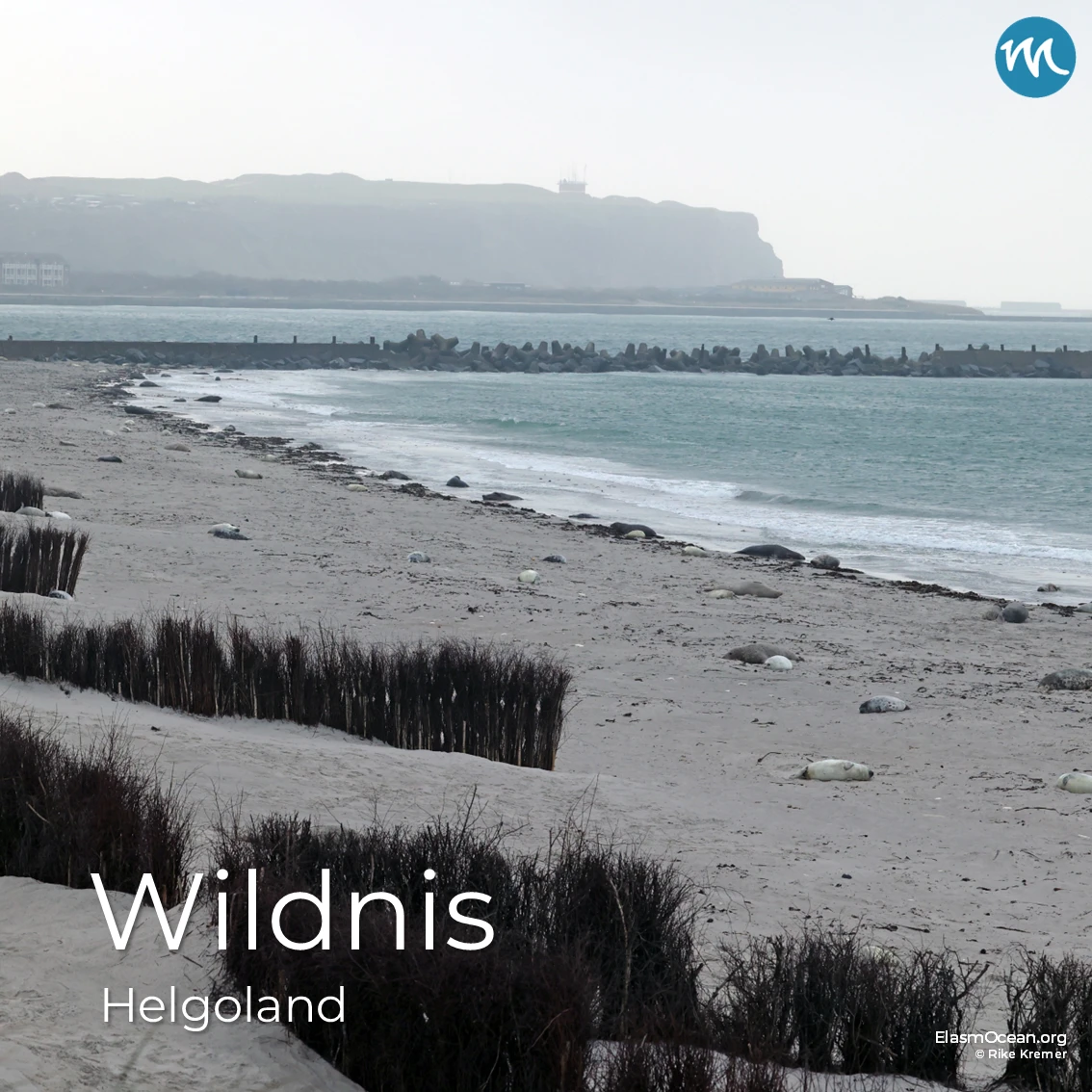
In December, extraordinary events unfold on Heligoland, Germany's only offshore island: grey seals (Halichoerus grypus) arrive on the Düne, the sandy neighbouring island of Heligoland. It is the depths of winter, stormy and rainy – and yet, in this harsh season, the grey seals give birth to their pups.
Our team visited the island to participate in a seminar on Germany's largest predators, the grey seals, led by Dr Leonie John, biologist and head of the Naturakademie Jordsand. Before setting foot on the Düne, the team was briefed that touching the grey seals is strictly prohibited and distance must be maintained. These rules are in place and strictly enforced. However, the prohibition on contact (requiring a 30-metre distance) and the simple advice that a large telephoto lens is only necessary if one wishes to photograph individual whiskers, did not prepare us for what lay ahead. It was truly a close-up encounter with the grey seals, where humans frequently had to yield the path. Approximately 800 animals are scattered everywhere, including on or directly adjacent to the footpaths.
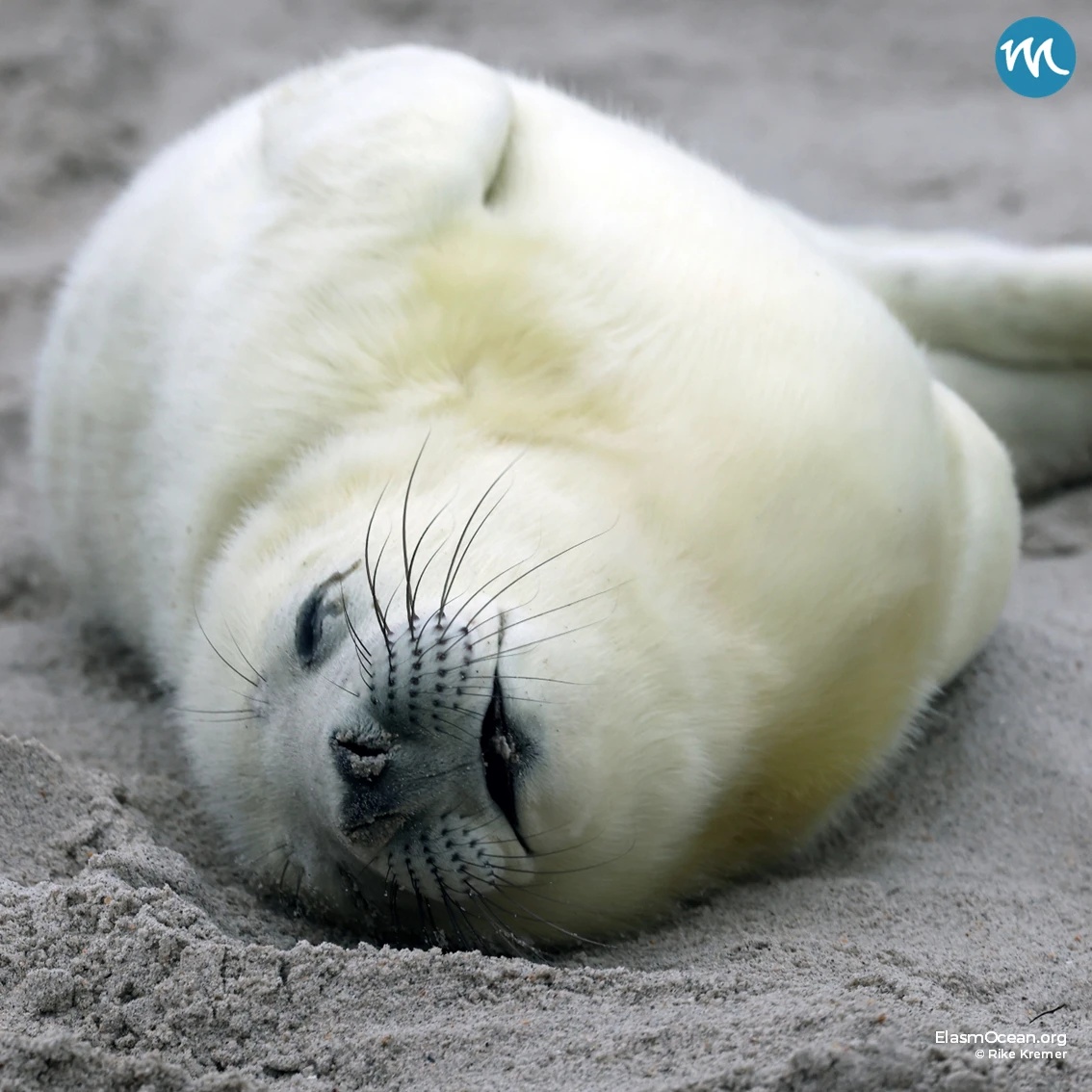
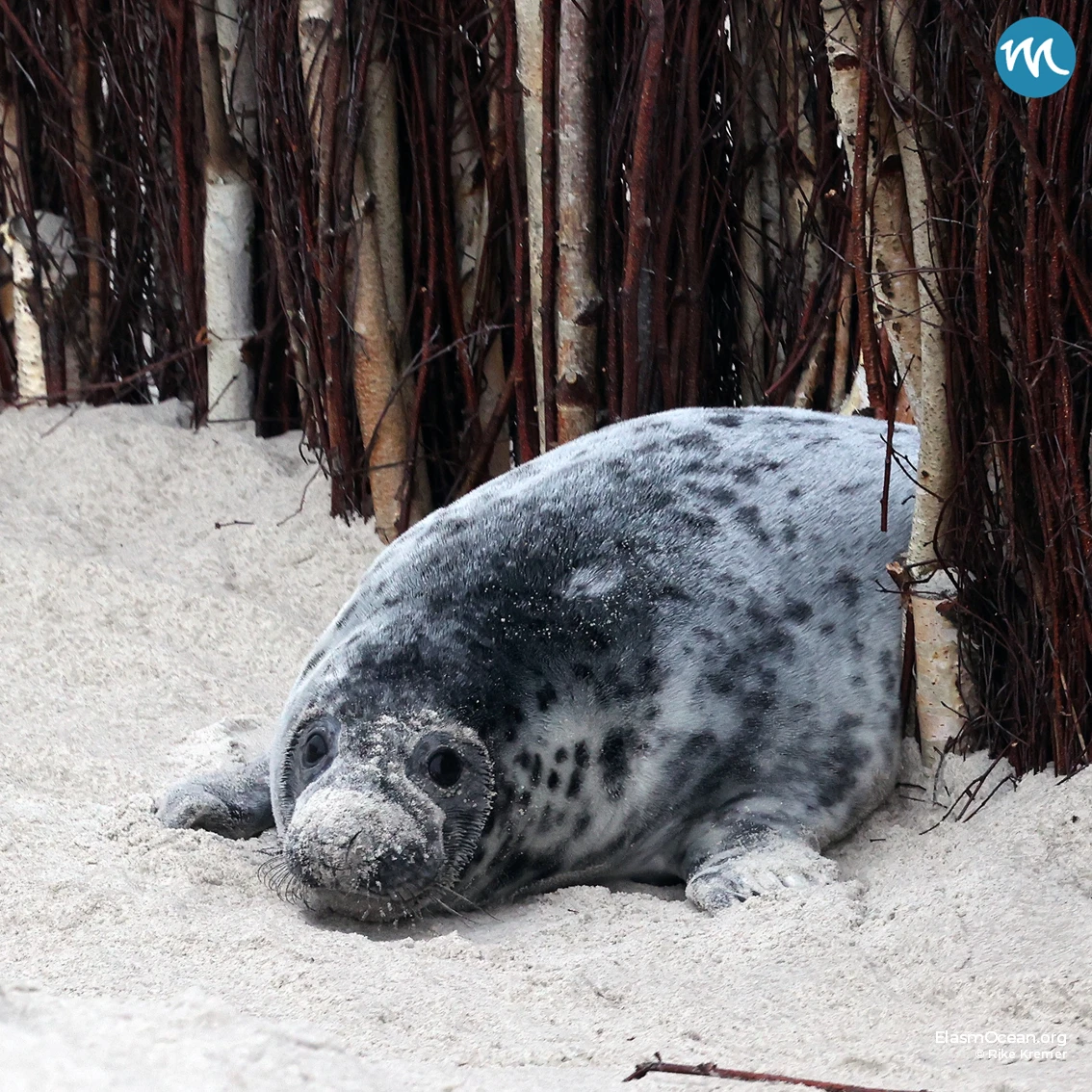
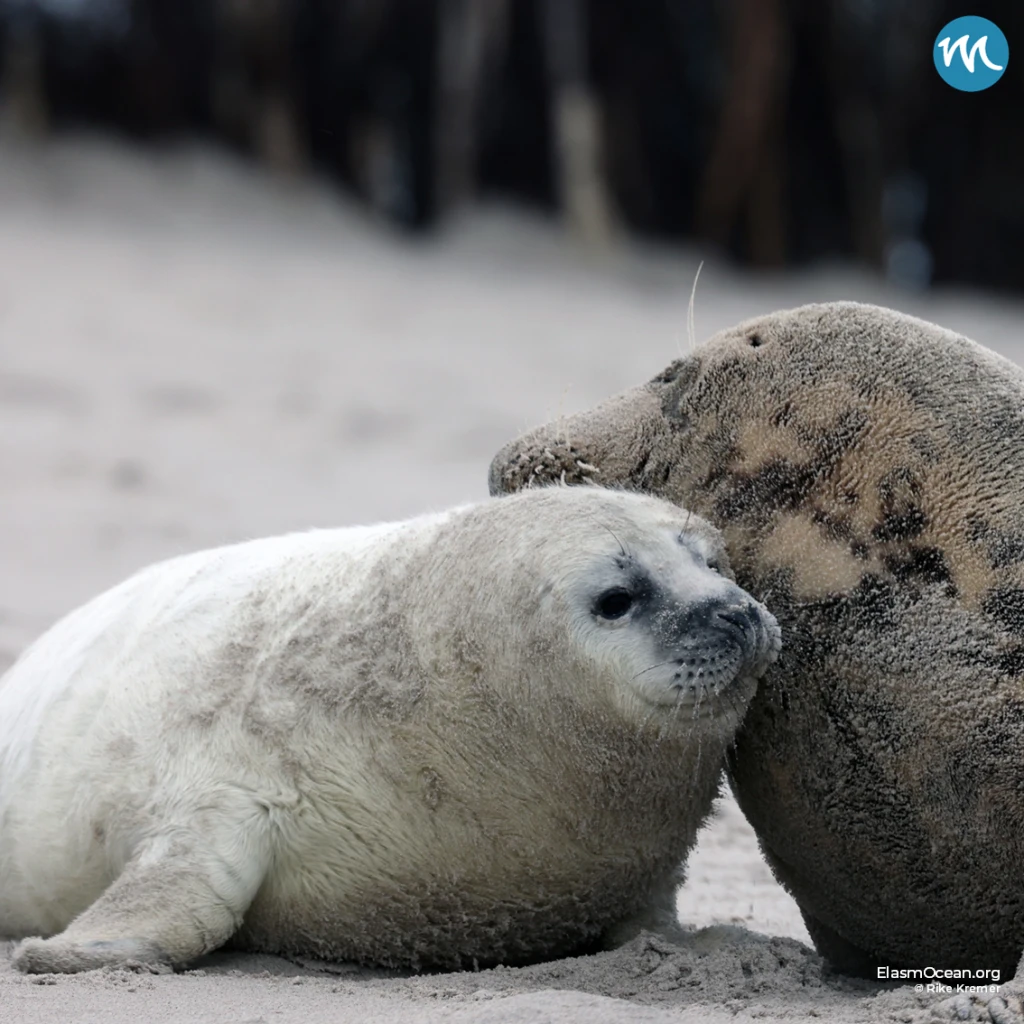
The pups are born with a fluffy white coat (lanugo) and are nursed by their mothers for two to three weeks. Seal milk contains 50 to 60 percent fat, enabling the pups to grow rapidly from a birth weight of approximately 12 kilograms to 45 kilograms. Around the fourth week of life, the pups are weaned and left to their own devices. During this phase, the juvenile seals moult their fluffy white coat. The mother mates again with a bull on the beach and returns, significantly emaciated, to the sea. Once the moult is complete and hunger drives the young seal, it also makes its way into the North Sea, where it must hunt and survive independently from the outset.
Grey seals are Germany's largest predators and are strictly protected. They are the apex predator of the North Sea and absolute opportunists. This status did not protect them from being hunted to near extinction by humans. Only since protective measures took effect, such as the hunting ban imposed in the North Sea and Baltic Sea in 1988, have populations recovered. The grey seal nursery on the Düne near Heligoland is a prime example of how effective conservation efforts can be when animals are granted the necessary space and human interference is minimised.
The Verein Jordsand contributes to building an understanding of these animals through census monitoring and educational seminars. Our team experienced an educational and fascinating weekend with Leonie John and her team.
Grey Seal Profile:
Weight: 250–330 kg
Length: 2.8 m (m); 2.3 m (f)
Coat: base colour with spots, dark with light spots (m), light with dark spots (f)
Parallel, II-shaped nostrils
Lifespan: 25–30 years (m), 30–35 years (f)
Diet: fish and molluscs, other marine mammals
Moulting: February–March
Reproduction / Births: Nov.–Jan. (on land)
Mating: immediately following birth and nursing period
Locomotion: speed approx. 20 km/h on land, approx. 30 km/h in water.
Dive depth up to 140 m, dive duration up to 20 minutes