


Our proposals and demands to combat marine pollution
In this case, a great deal of power lies with the consumer. We decide how we want to live and how we shape our future. We bear the responsibility through our purchasing decisions and our lifestyle choices.
There are no more excuses. Everyone can take action.
Noise in the ocean
Why do whales and dolphins strand? Why do sharks and other marine organisms lose their orientation? One potential cause is noise in our oceans. It must be reduced. Based on scientific research, migration routes and population figures of endangered species, noise protection zones must be developed in our oceans. Military exercises involving the use of low-frequency and medium-frequency sonar must be limited to a minimum and conducted outside of migration routes. Local production, which would eliminate the need to ship products manufactured worldwide, could be another ecological approach to a solution, as could modern alternative shipping technologies that reduce noise from propellers and engines. The use of "airguns" for oil exploration must be restricted to a minimum.
A good overview of publications on this topic can be found here:
https://www.oceancare.org/de/unsere-arbeit/publikationen/#Unterwasserlärm
https://www.oceancare.org/de/unsere-arbeit/meeresschutz/unterwasserlarm/silent-oceans-ursachen-des-unterwasserlaerms/
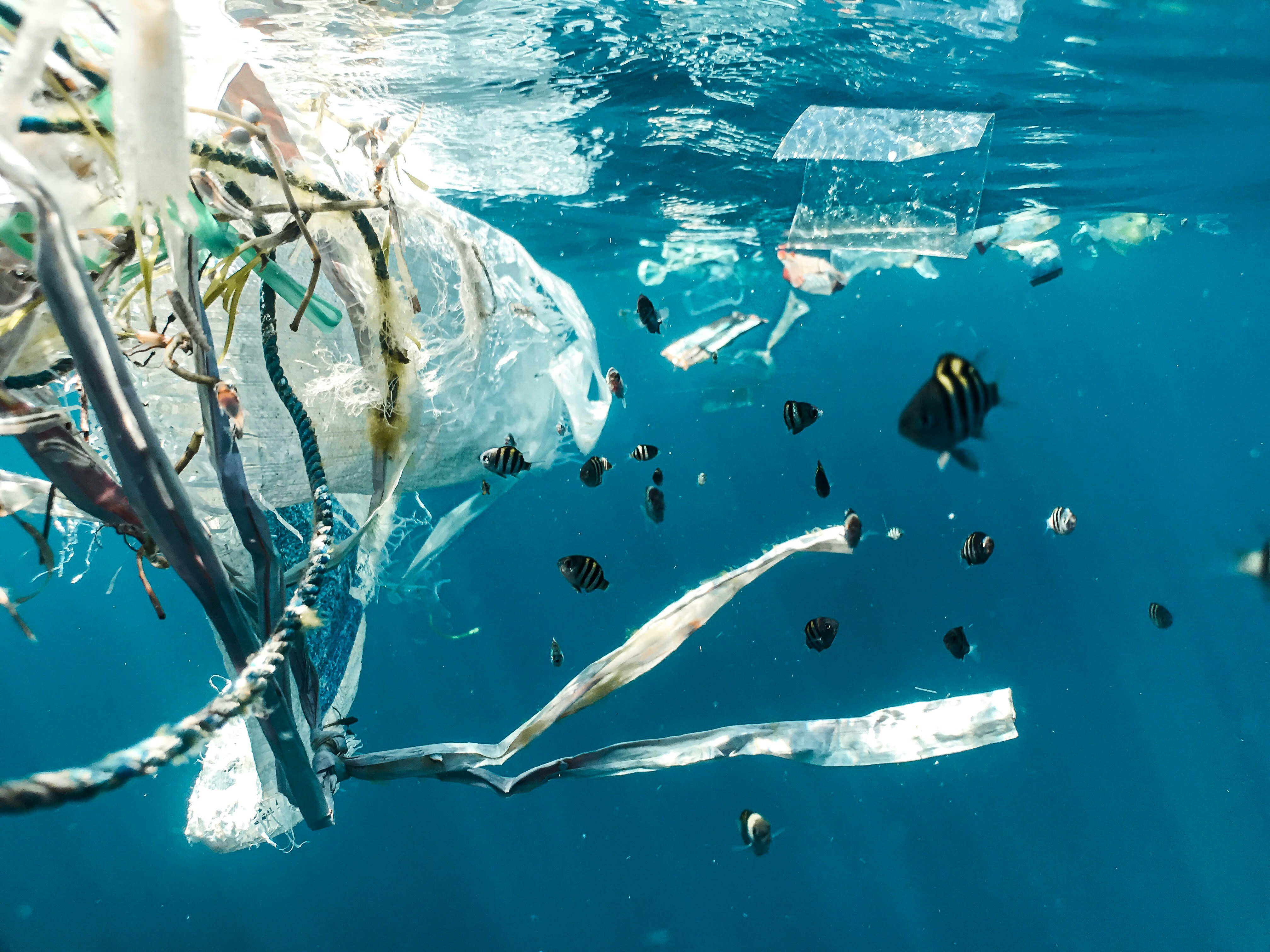
Plastic waste
Our oceans must no longer be abused as a dumping ground. Urgent paradigm shifts are required. Legislation banning microplastics or liquid plastics in cosmetics and household products, for example, must be rigorously implemented. Policy-makers are primarily called upon here, but also industry, which has so far made little effort to change its production processes.
Single-use plastic tableware and cutlery have been banned in the EU since January 2021. Germany has been implementing the agreement since July 2021. Nevertheless, consumers should also avoid plastic in daily life. If packaging is unavoidable, it can be reused, thereby retaining a practical utility.
Unpackaged concepts can also be partially implemented in supermarkets. The thin plastic bags at the vegetable counter must disappear completely and permanently. While bans and penalties are one aspect, another is far more critical: every individual can act, must act, because every plastic bag or packaging that is not produced, precisely because the consumer rejects plastic, is far better than recycling already produced plastic packaging, also with regard to the petroleum production required for it.
Further information on how to avoid plastic can be found in our section "Nachhaltig leben".
What do we offer?
ElasmOcean provides factual information on plastic, its impact on nature, and how to handle and avoid plastic correctly. ElasmOcean members are trained voluntary speakers who provide information on handling plastic at schools, institutions, companies, associations, museums, festivals, events and family gatherings.
Enquiries can be sent to kontakt@elasmocean.org
Who supports us?
Our patron for "Marine Pollution" is Hannes Jaenicke.
For many years, actor Hannes Jaenicke has been advocating for a better relationship with nature as an environmental and marine conservationist. His ZDF documentaries "Im Einsatz für..." have urgently demonstrated the importance of protecting our fauna and oceans. For years, however, he has also personally and consistently campaigned against marine pollution and for a more sensible use of plastic. Hannes Jaenicke lives what he says, consistently and sustainably.
We are very proud that he has agreed to serve as patron for this area. We could not wish for a more authentic patron than someone who sees his life's work in using his popularity for a better world.
Our comprehensive brochure on the subject can be found in our downloads.