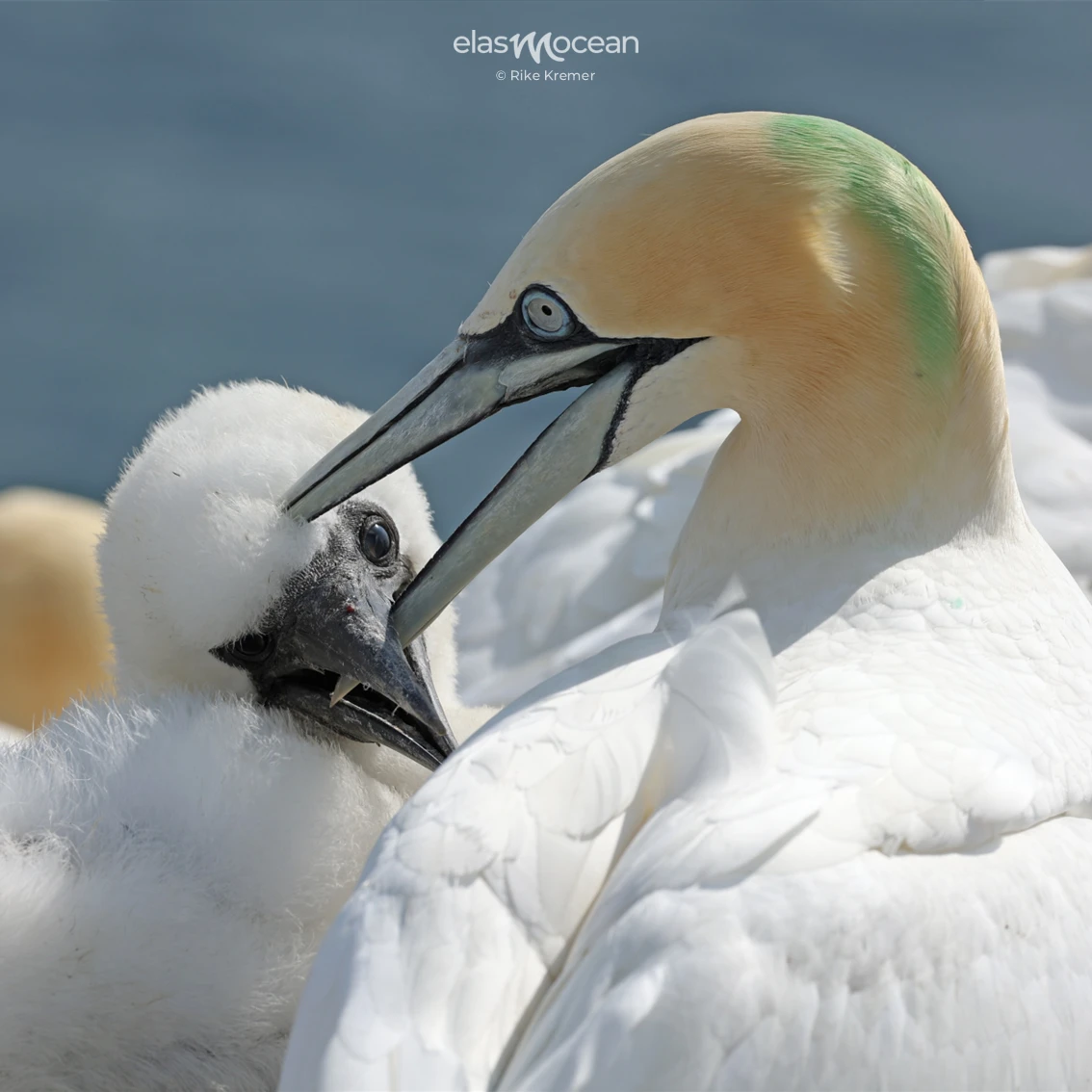
Just in time for the annual guillemot chick jump (Lummensprung), our team visited Heligoland again this year to meet with Elmar Ballstaedt and gather information on current developments. Every year in June, the common guillemot (Uria aalge) chicks daringly leap from heights of up to 60 metres into the North Sea, where their parents are already waiting for them. From their very first moment in the water, the chicks are excellent swimmers and divers. Thus, they follow their parents out to sea – while the breeding season for the northern gannets (Morus bassanus) is still in full swing.
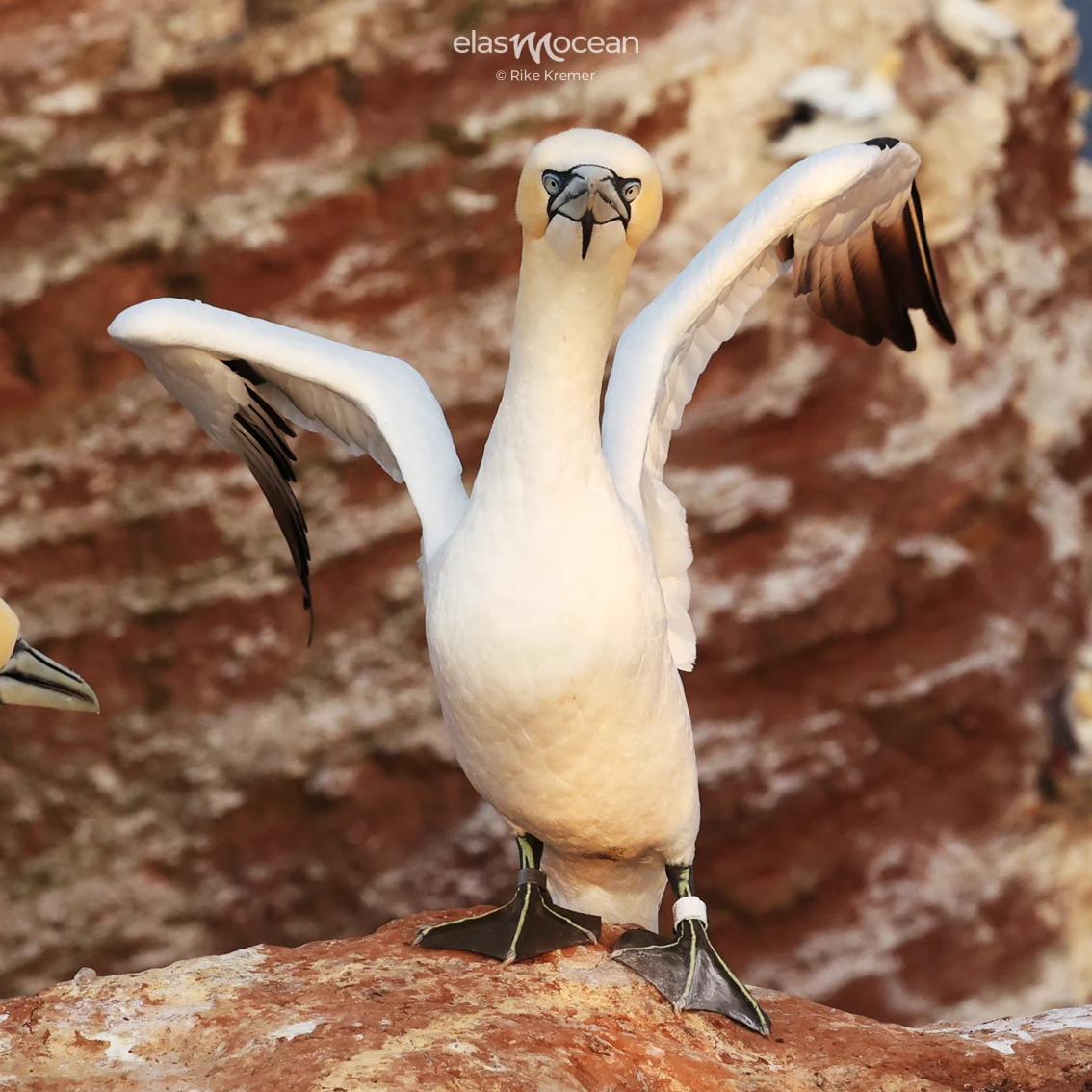
There is positive news from the colony: the populations of both northern gannets and common guillemots are recovering following the avian influenza outbreak of 2022/23. The number of breeding pairs is increasing once again – by approximately 100 pairs for the northern gannets compared to the previous year. Recent blood analyses of affected individuals continue to show antibodies against the virus, indicating a degree of resistance. Furthermore, the striking black eye colouration observed in many birds after surviving the disease appears to be fading or disappearing entirely.
Several previously infected birds have been fitted with transmitters to track their migratory routes. On the accessible plateaus, some northern gannets now bear a prominent green "head marking" for identification purposes.
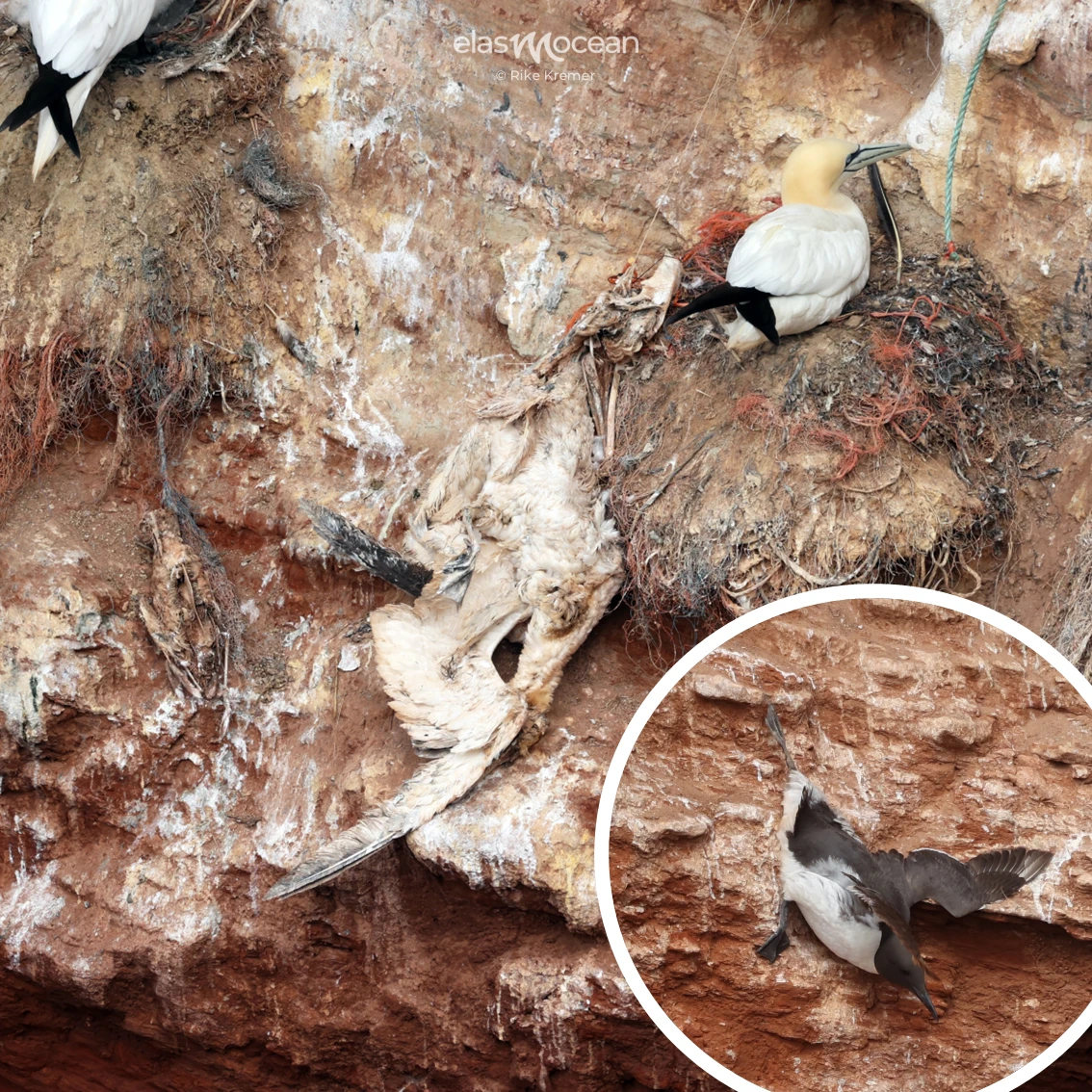
However, the primary issue on the Lummenfelsen cliffs and the Lange Anna stack persists: dolly ropes. Once again this year, common guillemots and northern gannets are becoming entangled in these plastic threads. Regrettably, no improvement is in sight – the fishing industry remains resistant to criticism and to altering its practices regarding dolly ropes. Consequently, we again observed birds acutely entangled and struggling for survival this year. Too often, this struggle unfortunately proves unsuccessful.
We will return in 2026.