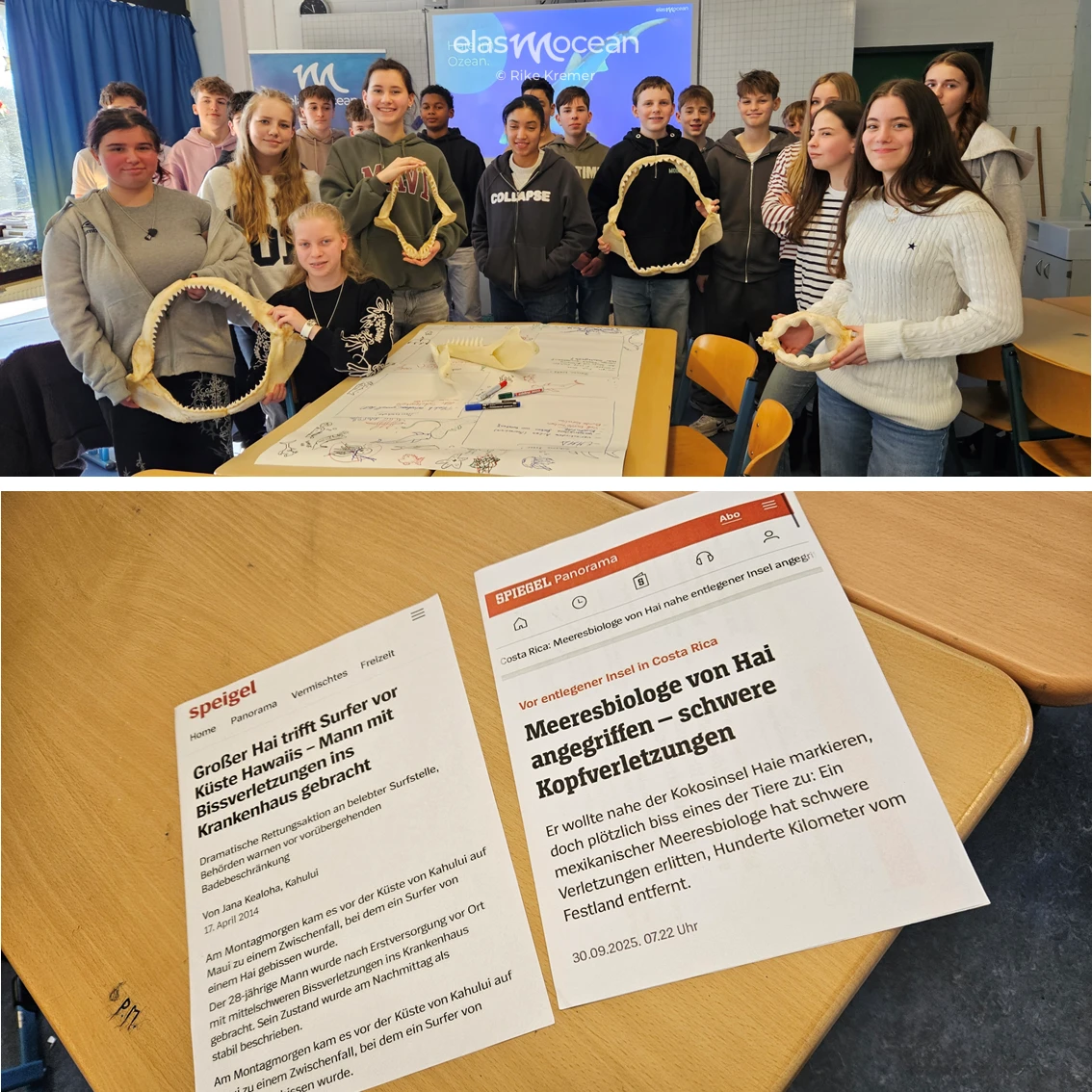
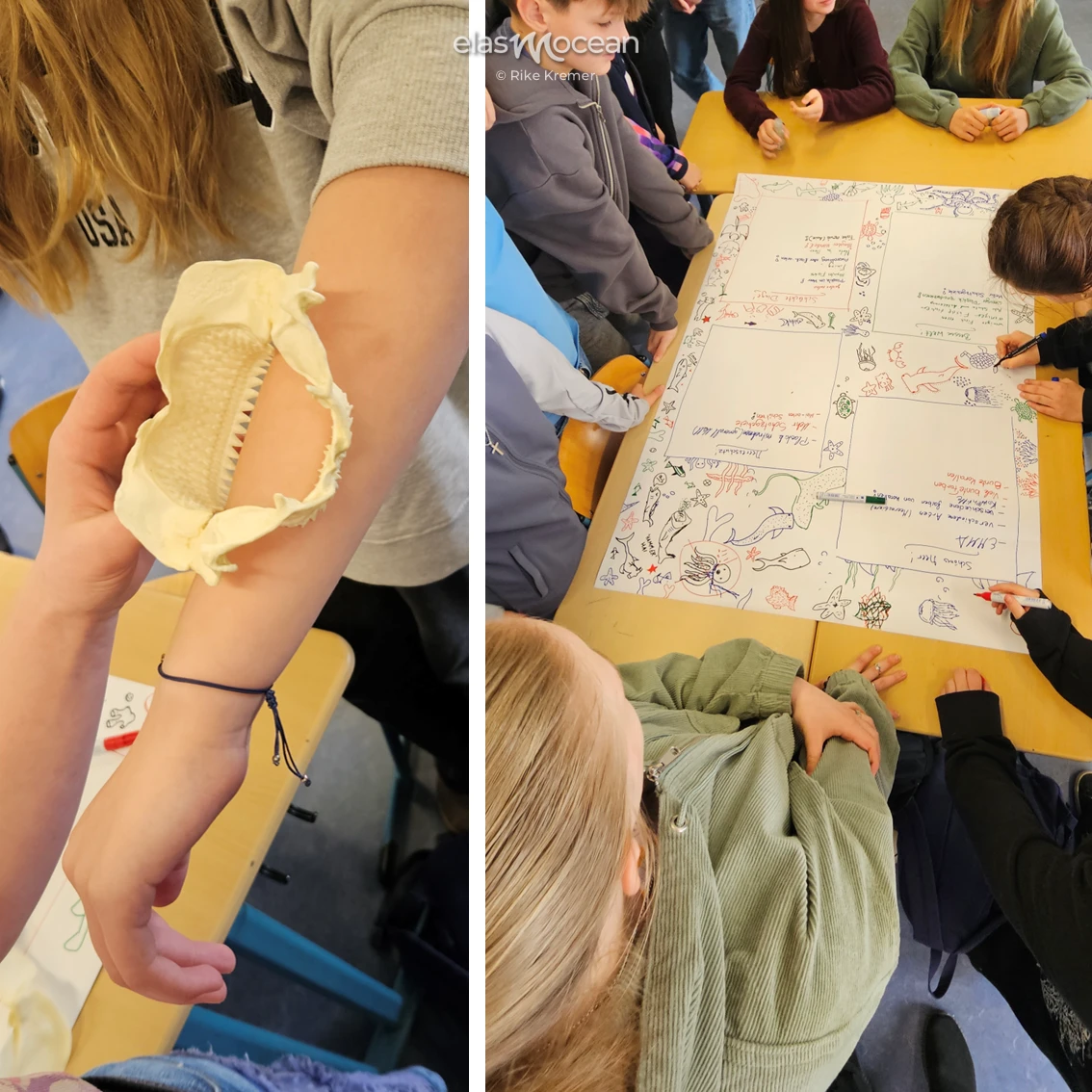
The eighth-grade pupils at the Friedrich-Albert-Lange-Schule, a sports-focused secondary school in Solingen, specifically requested the topic "sharks" during a project week. And they got sharks, because: "We do sharks!"
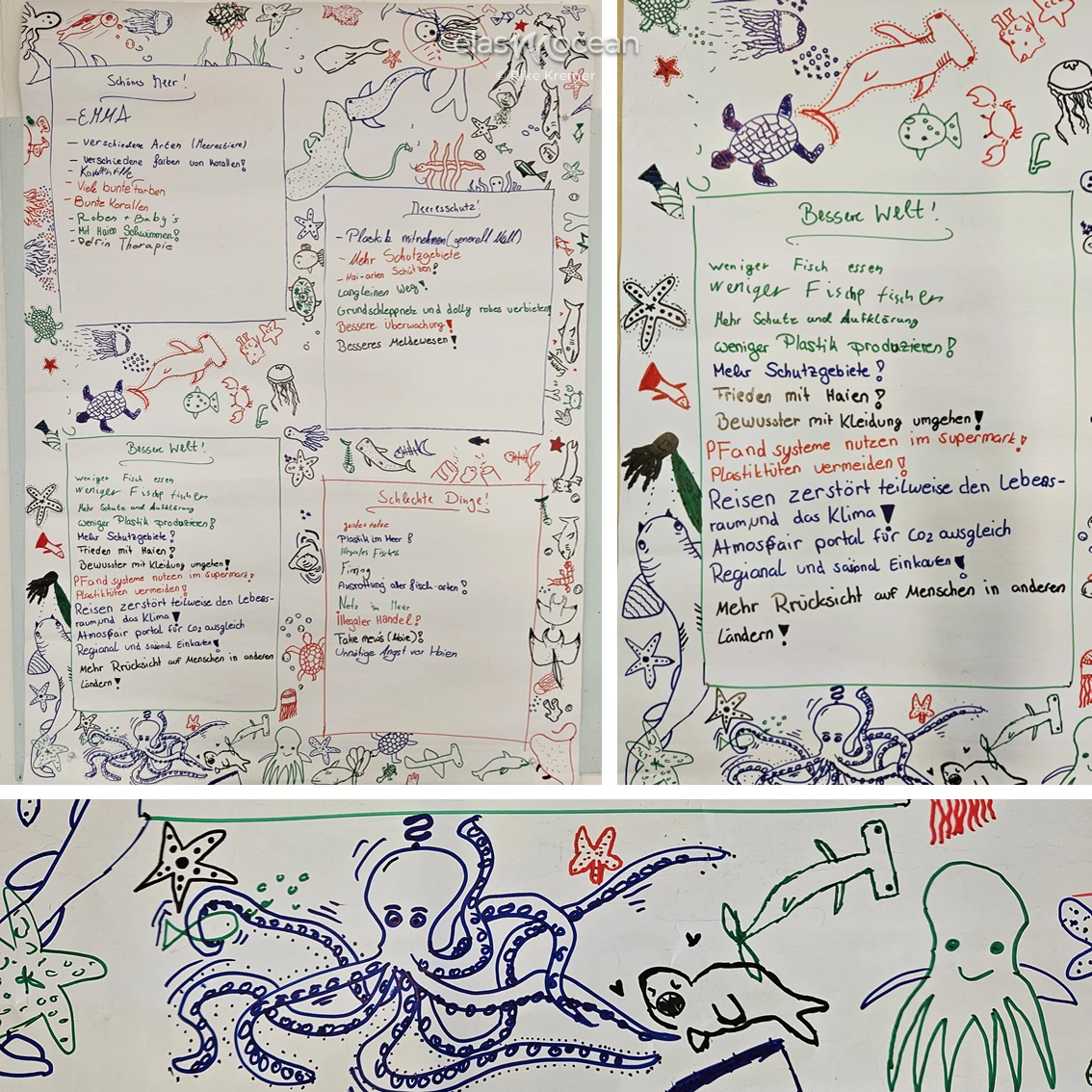
For two days, ElasmOcean instructors visited the class, first providing a crash course in marine ecology and – closer to the Rhineland – the North and Baltic Seas. It is important to us (notwithstanding our commitment to protecting sharks) to convey that the seas on Germany's doorstep also face severe ecological pressures caused by Homo sapiens, and that direct action can be taken here as well.
Naturally, the shark was then introduced as an apex predator and keystone species in the ocean, alongside topics such as evolution, global fisheries, and conservation strategies. The second day focused on the human fear of sharks, the anatomy of these fish, and their behaviour.
Finally, using this acquired knowledge, real-world shark encounters were analysed. AI-generated media and fake news regarding shark encounters were independently discussed by the pupils: How do you identify an AI-generated newspaper report? What makes it inaccurate? Notably, because media coverage of shark encounters consists almost entirely of sensationalised headlines, the AI reports trained on this data were similarly bizarre – and therefore easily recognisable. The original report by a scientist well known to us was compared against the fake news, which was met with great interest by the pupils.
The pupils concluded that they had not realised how interconnected these systems are, that our daily actions have such consequences, that fish, turtles, and dolphins suffer severely in nets – and that every individual can make a difference.