


As part of her marine biology studies at the University of Bremen, our team member Luca was fortunate enough to spend a short time as a crew member on board the research vessel "Sonne", operated by the Alfred-Wegener-Institut. She shares her journey below:
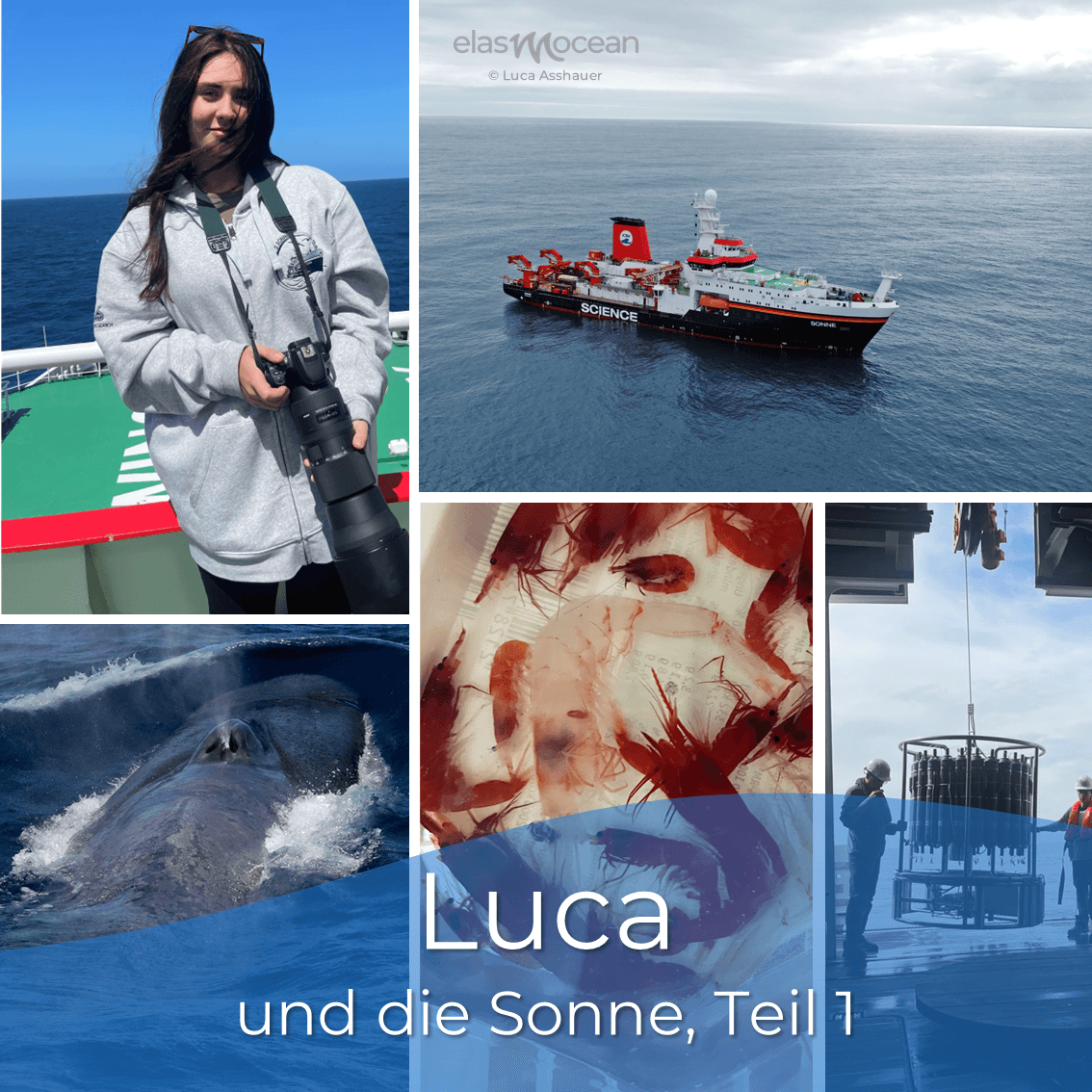
„Fremantle Port - Week 1 SONNE
Our expedition on the research vessel "Sonne" begins with our departure from the port of Fremantle (Australia) heading towards the Indian Ocean. For the next few weeks, we will be on the 120-metre research vessel more than 200 nautical miles away from the Australian mainland, where water depths reach up to 5,000 metres. The first week was a mix of scientific onboarding, dealing with seasickness, and getting to know many new people. To ensure nothing falls over on the high seas, our equipment, such as microscopes, is strapped down to the tables.
We are working with a CTD instrument. This device measures conductivity, water temperature, and depth. You can also see an array of Niskin bottles, which can be lowered to depths of over 1,000 metres not only to collect water from specific depths but also to provide us with real-time data on salinity, chlorophyll content, and temperature. The CTD is an essential component of my project - the collection of eDNA. Over the coming weeks, I will be filtering water samples from various depths to isolate environmental genetic material. This will enable us to determine specific species and their distribution, among other things.
Every morning before sunrise, we deploy an IKMT net to record organisms from the mesopelagic zone (down to 2,000 m). These species can later be compared with the DNA sequences obtained from my project.
Once a day, I head up to the "monkey deck" at the very top of the vessel. Naturally, this offers the best vantage point - especially for spotting cetaceans and seabirds. In the first week, we were already highly privileged: minke whales, dolphins, and blue whales (Balaenoptera musculus)! Not to mention the albatrosses and petrels circling our vessel every day. Incredibly beautiful!
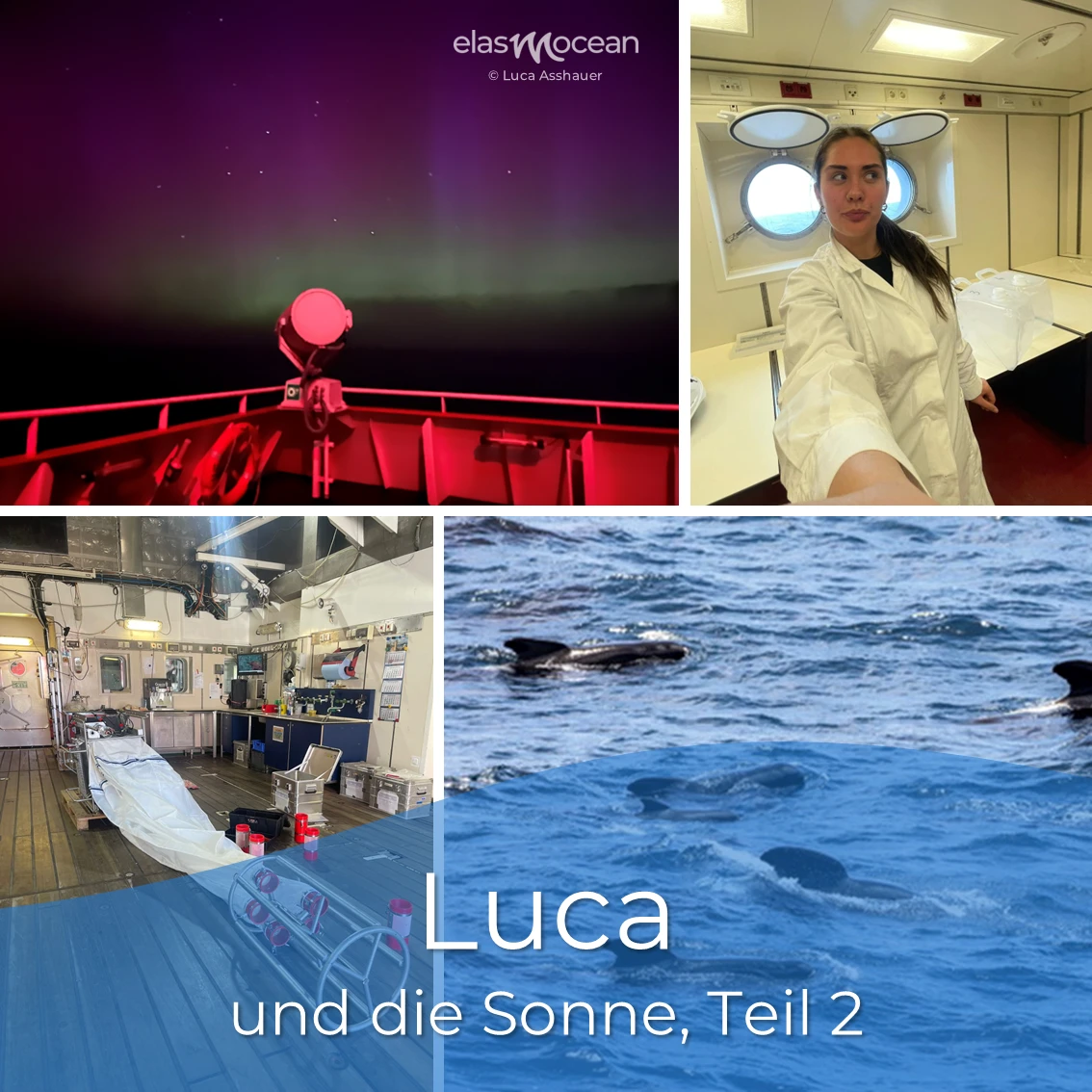
Pilot whales on New Year's Day
The new year starts with a surprise: a pod of up to 70 pilot whales (Globicephala) greets us right on New Year's Day. The day begins with good weather and calm seas, and during the night, we are finally woken up - auroras! What a fantastic start to 2025!
Over the following days, the work at individual stations continues. We are now in the middle of the Indian Ocean, with no other vessel on the horizon. We rise early in the morning, lower our nets, the CTD, and the plankton nets, and get to work. Alongside fish and krill, there are also many jellyfish in our nets. All of these species must be identified, counted, and weighed. To gain a better understanding of environmental conditions at different depths, we use the water from the CTD to determine productivity (chlorophyll and oxygen levels). Whale watching also remains captivating: 2025 begins with two more blue whales (Balaenoptera musculus), common dolphins (Delphinus delphis), fur seals, and finally, sightings of Australasian gannets (Morus serrator).
In the middle of the second week, we conduct our 24-hour station. This involves remaining in the same position in the open ocean for a full day, completing four sampling cycles to conduct measurements twice during the day and twice at night. This requires rising early and, of course, staying awake late. The objective is to investigate the diel vertical migration of organisms within the water column. The theory: organisms such as zooplankton, fish, and others migrate closer to the sea surface at night to feed. The entire food web then returns to the deeper layers of the ocean during the day as light levels increase. Will our results confirm these assumptions? What fascinating deep-sea fish will we encounter?
Heading towards New Zealand
At the beginning of the third week, we cross the shipping lane between Australia and Tasmania. The sea remains calm. We are fortunate, as the water depth in this area does not exceed 100 metres. Consequently, we do not take eDNA samples, the IKMT nets remain on board, and we have time for whale watching and some recreation.
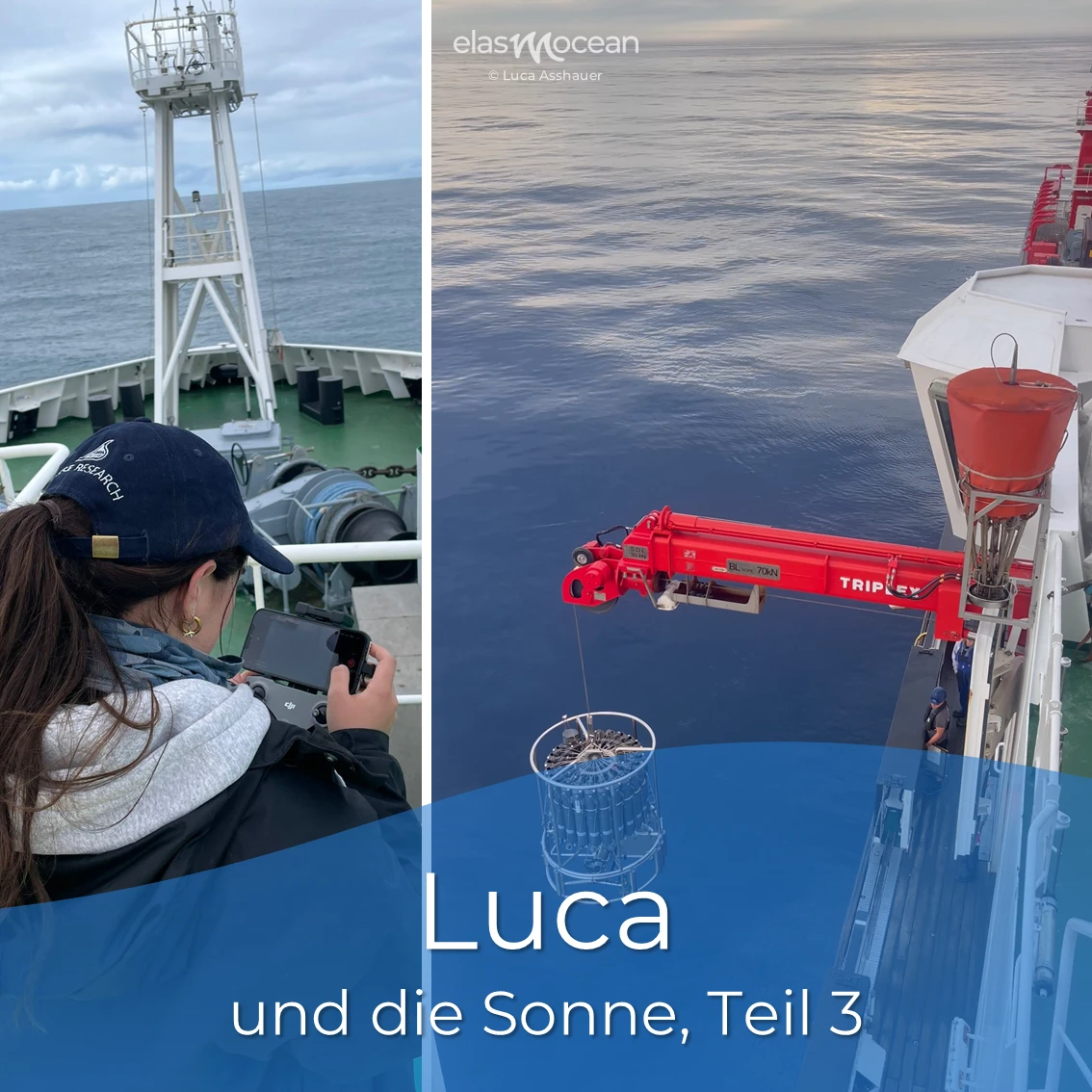
After officially leaving Australia behind, the sea becomes rough. Rain and high seas mean the hatches are closed - and the first crew members are thrown from their berths at night. No larger marine fauna is sighted during our observations either. After a few days, the sky clears again, and the captain gives me the signal for the drone flight. Argo floats are also being deployed on behalf of the University of Tasmania. These are autonomous profiling floats that collect data on salinity, currents, and other parameters, transmitting them to the university in real time.
The remaining work continues as scheduled over the next few days. By the end of our voyage, we have completed a total of 15 stations, covered 3,110 nautical miles, collected countless samples, and recorded 23 species of petrels. Shortly before the end, another dolphin species is added to our list: a pod of striped dolphins (Stenella coeruleoalba) is sighted, including three calves.
We spend the final days tidying the laboratories, packing away the equipment, and making further preparations for our disembarkation in New Zealand. I will definitely miss life on board - not only the scientific work, but also living alongside such wonderful people."
ElasmOcean would like to thank team member Luca for providing this fascinating insight!


