


On the occasion of the UN Ocean Conference in Lisbon, Federal Environment Minister Steffi Lemke is also travelling to Lisbon.
Her appeal: ‘If we do not stop the destruction of the oceans, we threaten not only wonderful natural treasures but also our own livelihoods. Marine conservation helps us in the fight against the climate crisis, the pollution crisis and the extinction of species.’
But what does this marine conservation with the highly ambitious "30 by 30" target look like in reality - 30% of the oceans under protection by 2030, as pledged by many countries including Germany?
On our first “Global Fishing Watch” map, we can see the existing marine protected areas in Germany (marked in green):
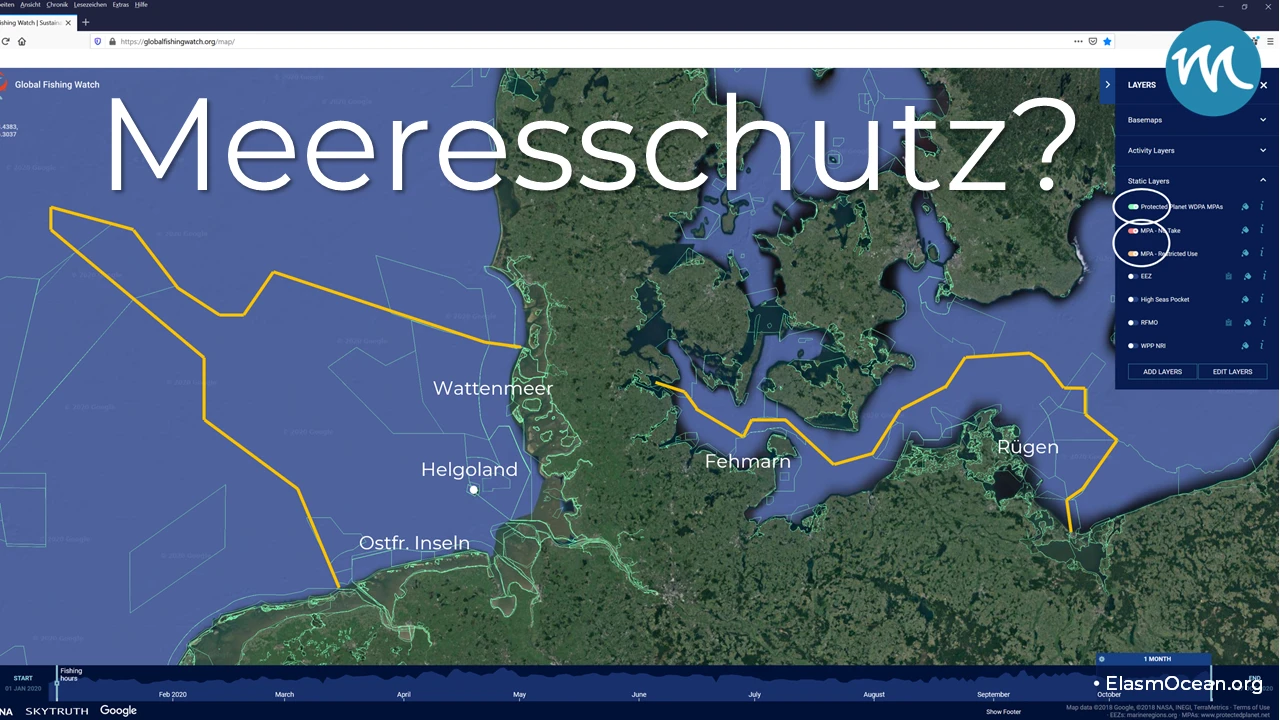
Marine conservation with protected areas in Germany permits fishing, sand extraction and shipping, and even tunnel construction: directly off the island of Fehmarn, the tunnel of the same name to Denmark is being built right through the “Fehmarnbelt” marine protected area. De facto, there is not a single so-called “no-take” zone in the North and Baltic Seas, i.e. an area in which actually not a single fish may be caught, and thus genuine protection without human use. But it gets even worse, as can be seen on the second map:
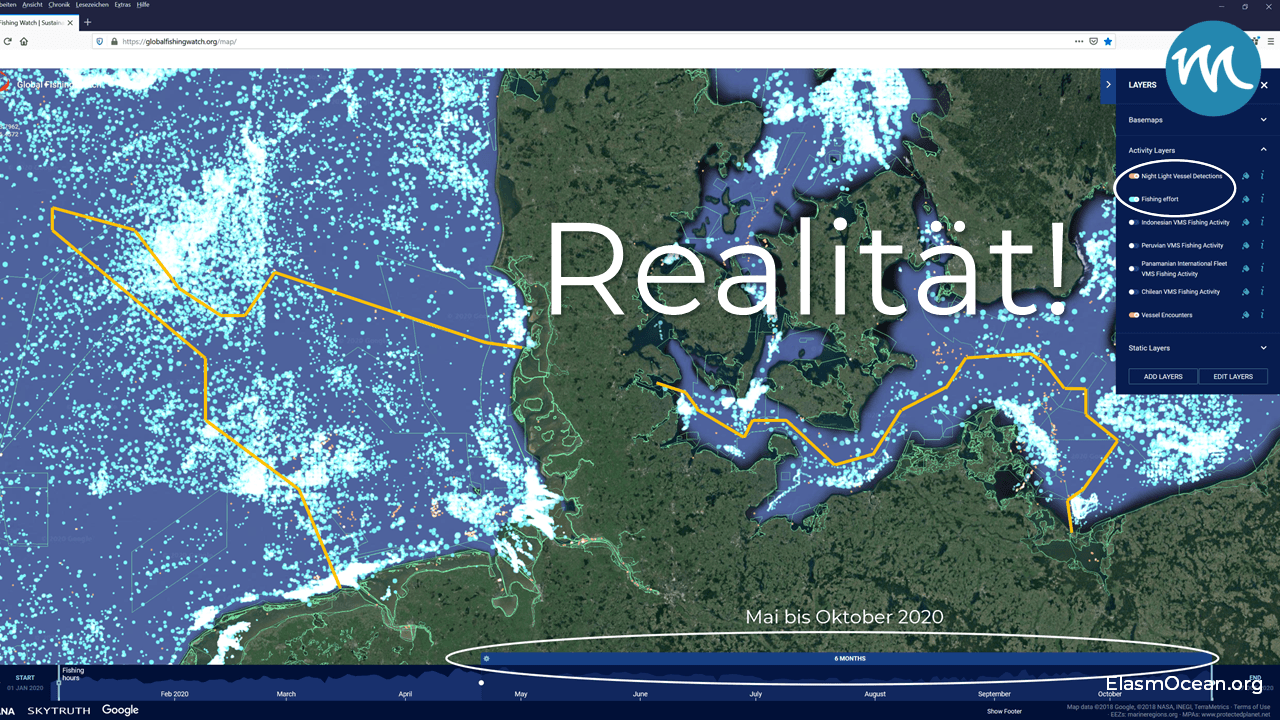
Every single one of these many white dots on the map represents fishing activity, shown here as an example over the period from May to October 2020. Particularly in the North Sea, one of the most destructive fishing methods, bottom trawling, is extensively practised. With bycatches of up to 90%, a permanent abrasive destruction of the seabed and the deliberate loss of plastic through dolly ropes (wearing net chafing protection made of polyethylene), it is partly responsible for the destruction and extinction of species in the North Sea.
The ministerial press release on the UN Ocean Conference states confidently: ‘Healthy oceans are vital for us humans to survive. We must therefore move from talk to action and give marine conservation a much higher priority.’ The current reality in the sea on our doorstep: overfishing, unsustainable fisheries, shipping traffic, eutrophication, construction projects and protected areas that only exist on paper - the situation is more than bleak. We therefore take Federal Environment Minister Steffi Lemke at her word and call on her to put things in order on her own doorstep and finally implement effective marine conservation in the North and Baltic Seas. Further background: https://www.zeit.de/news/2022-06/27/un-ozeankonferenz-startet-mit-emotionalen-appellen

