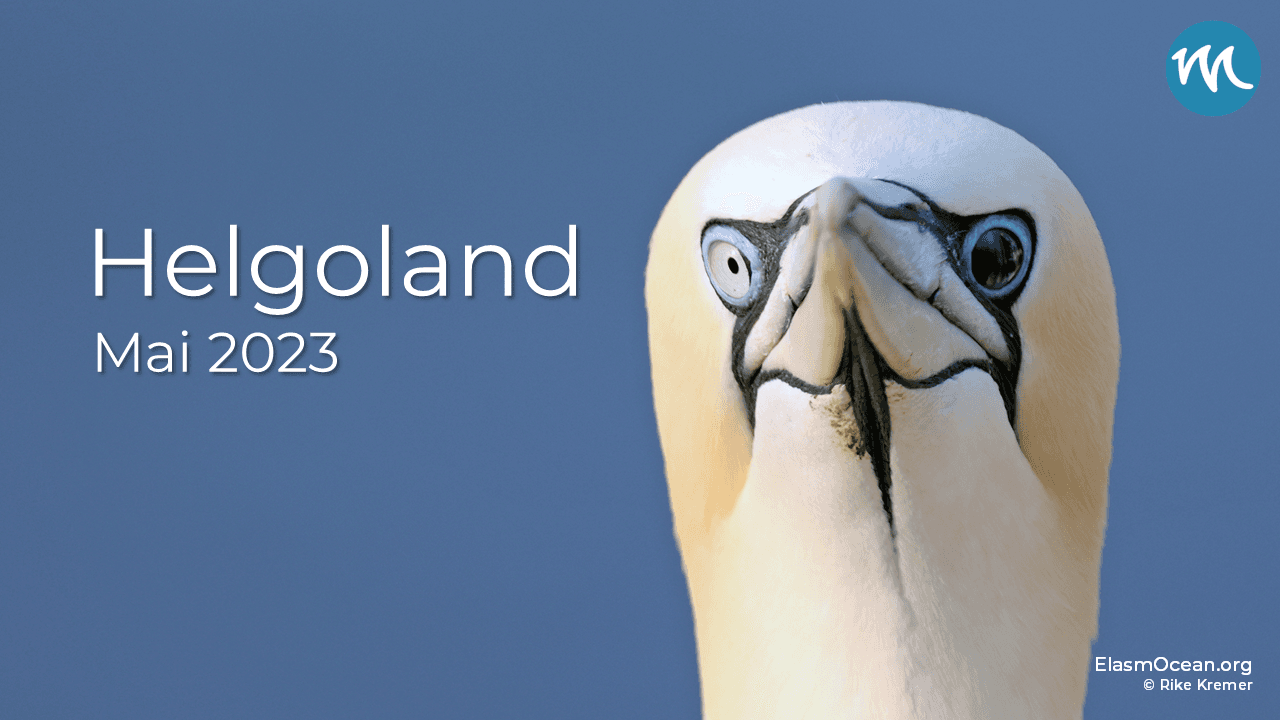
As part of our commitment to the German Northern Gannet population, our team visited Heligoland again in May 2023. The devastating outbreak of highly pathogenic avian influenza there in the summer of 2022 cast a shadow over this visit from the outset — and unfortunately, our fears were confirmed. The avian influenza has clearly left its mark.
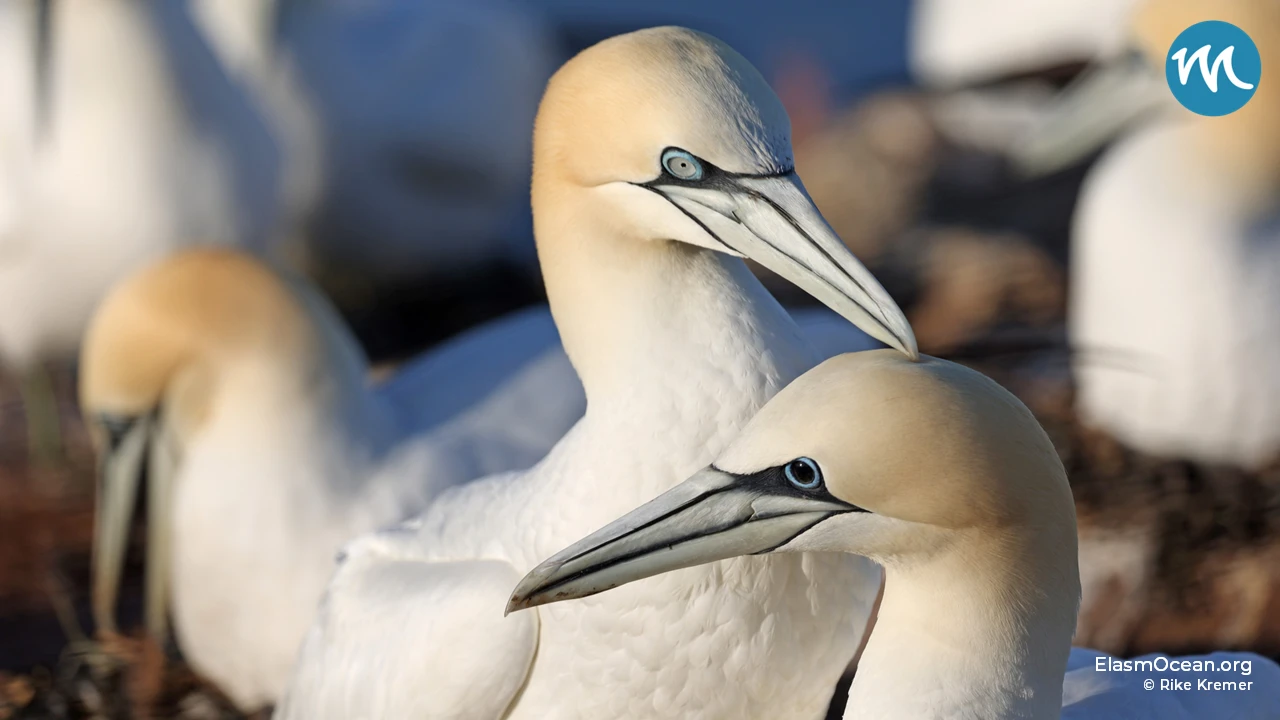
Only about one-third of the Northern Gannets (Morus bassanus) returned to their nests in the spring of 2023. Many nests remained unoccupied; at some, a partner of these monogamous birds waited for its mate, who will likely never return. Highly pathogenic avian influenza unfortunately has a high lethality rate.
But there is another change. The birds that return often exhibit a grey-speckled or completely black iris. Dark eyes instead of light grey or white. Because so many of the Northern Gannets now display these dark eyes, investigations were conducted and confirmed: only infected and recovered birds with avian influenza antibodies in their blood exhibit this phenomenon, as confirmed by a preprint study on Northern Gannets at Bass Rock, Scotland. However, the question of whether recovered birds are immune to H5N1, or if they can be reinfected, remains open.
“Further investigations will follow,” says Elmar Ballstaedt, director of the Verein Jordsand on Heligoland. “Northern Gannets with dark eyes will be fitted with transmitters and blood samples will be taken. We want to determine whether this truly only affects recovered birds and whether the animals alter their migratory routes.”
In normal years, the breeding success rate of the Northern Gannets is approximately 60%, whereas in 2022, only 14% of the chicks survived.
Another question has been answered: namely, whether the virus survives the winter in the nests. Samples indicated that the H5N1 virus was no longer detectable in the nests by spring. This is at least some positive news.
It now remains to be seen how the situation will develop further in 2023. In Cuxhaven, dead gulls have already washed ashore and tested positive for avian influenza. H5N1 is therefore still present. Should the virus return to Heligoland, it would likely have catastrophic consequences for the depleted bird population there. Northern Gannets are particularly vulnerable because they have a very slow reproduction rate, and the loss of breeding-age birds would be especially critical — this could even threaten the species' local population on Heligoland.
“We are prepared and forewarned, unlike in 2022. We know what to do if another outbreak occurs! We cannot prevent it, we can only hope that the Lummenfelsen is spared this year; if so, the prognosis for the survival of the colony is good!” says Elmar Ballstaedt.
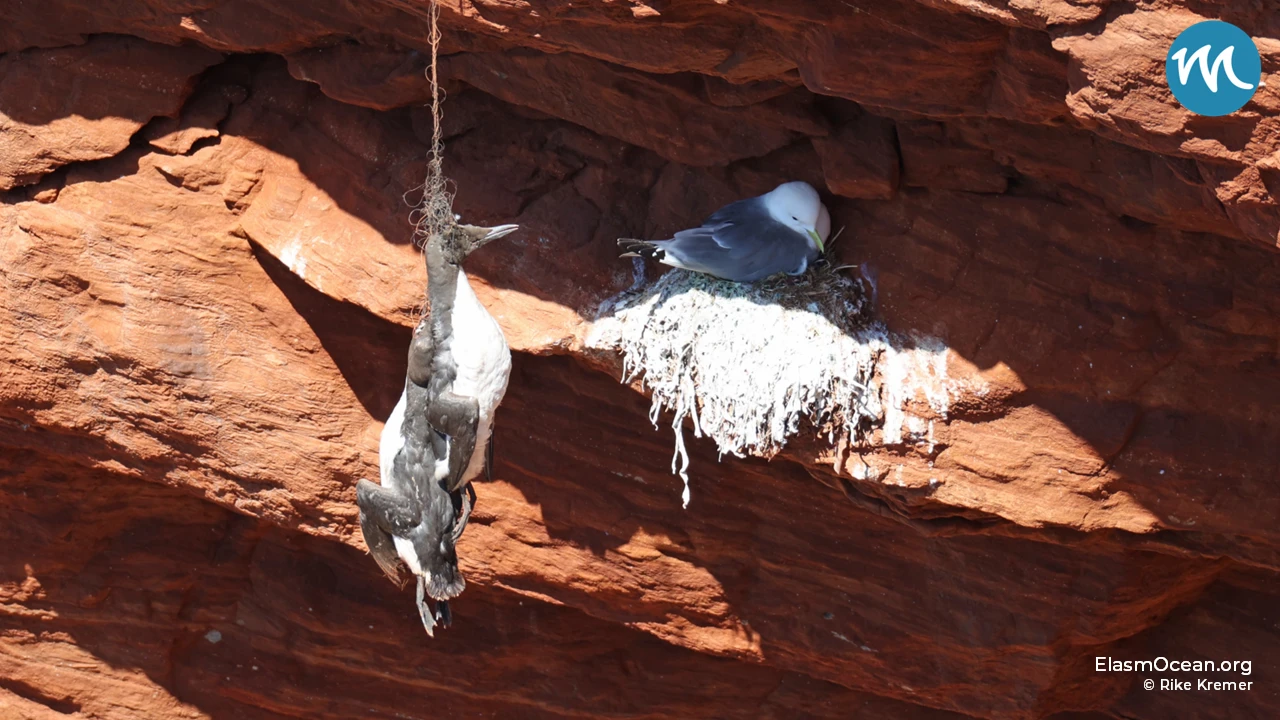
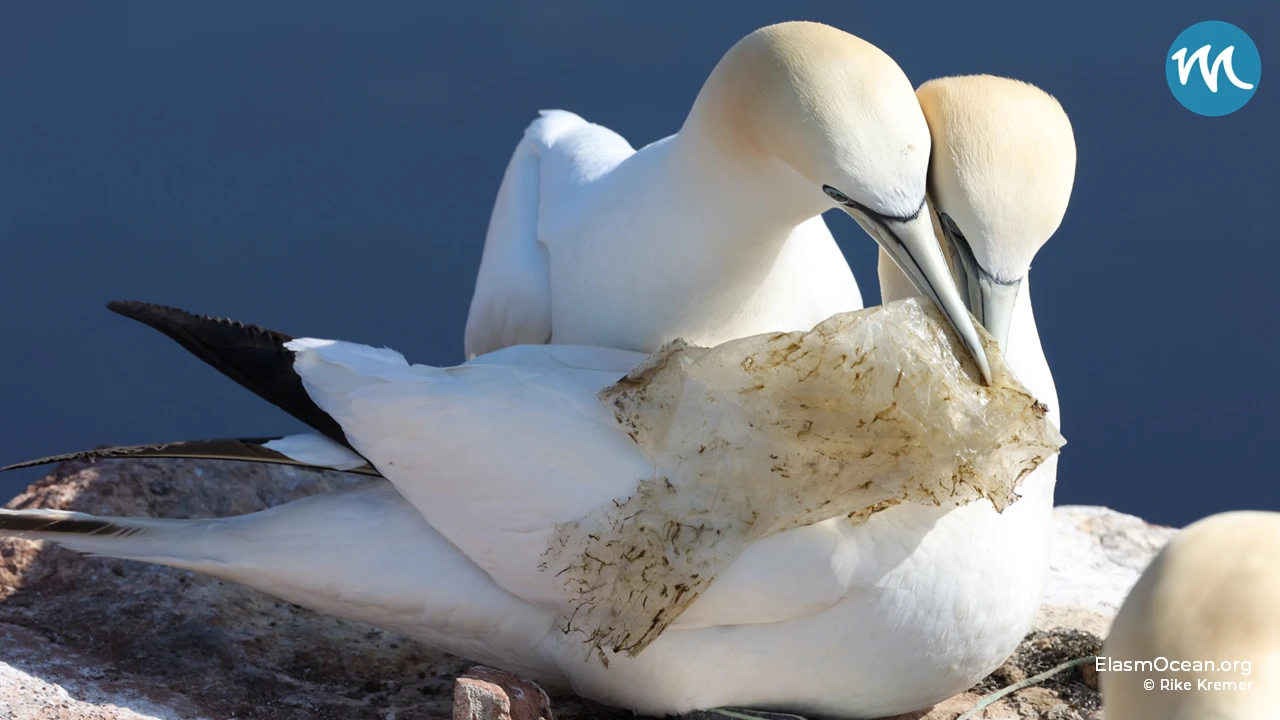
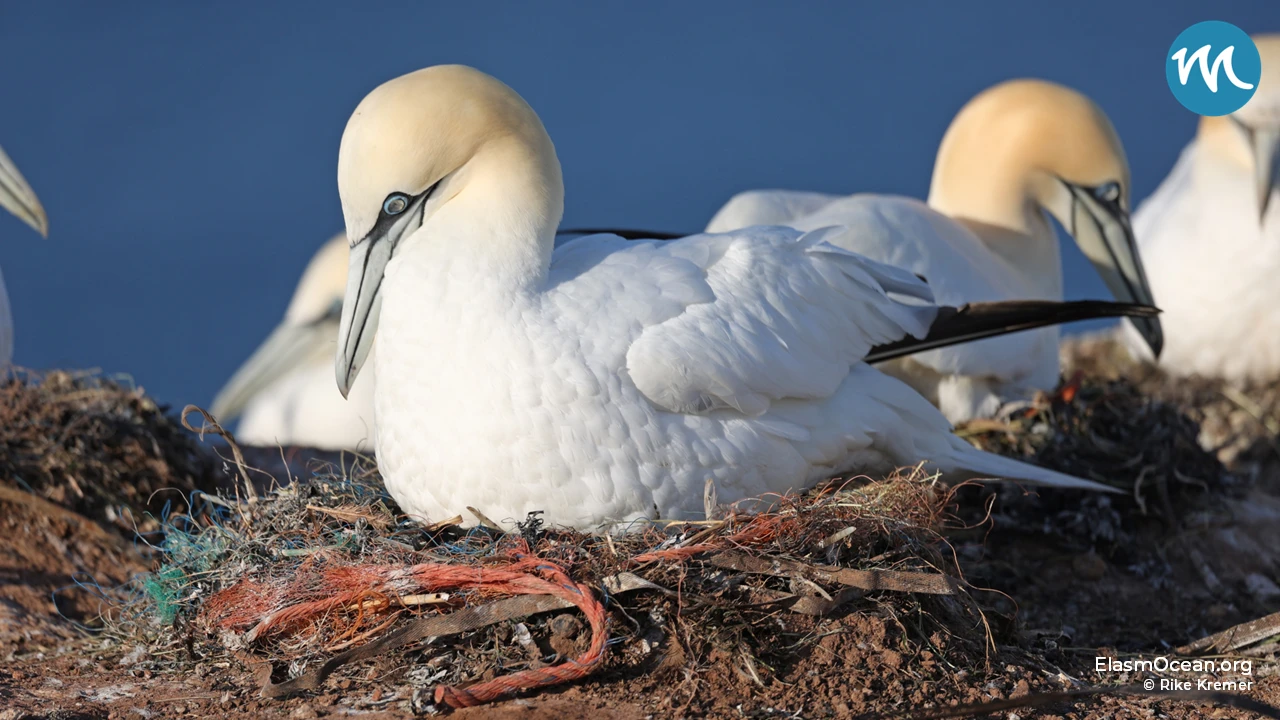
Another ongoing problem is the entanglement of birds in plastic debris within their nests. The animals collect this waste (primarily dolly ropes, the anti-abrasion nets used on bottom trawls) at sea and bring it to the island for nest construction. Another bird species, the Common Guillemot (Uria aalge), is now particularly at risk, as they occupy the abandoned nests of the Northern Gannets and also become entangled and trapped in the fishing lines. The first casualties are already hanging in the cliffs. Here, too, time will tell how many Common Guillemots will perish.
Summer 2023 on Heligoland thus begins with many uncertainties and the severe threat of the colony being struck by H5N1 once again. Which bird species will be affected depends largely on timing, as the Common Guillemots depart the cliffs for the sea with their chicks as early as June. Therefore, hope remains that it will not be as catastrophic as the previous year, and perhaps the Lummenfelsen, with all its beautiful and fascinating inhabitants, will be spared this year.
Source:
High pathogenicity avian influenza (H5N1) in Northern Gannets: Global spread, clinical signs, and demographic consequences, May 2023, Jude V Lane, Jana WE Jeglinski, Stephanie Avery-Gomm, Elmar Ballstaedt, Ashley C Banyard; https://doi.org/10.1101/2023.05.01.538918.