


Even as Europeans, we are familiar with Great White Sharks, bull sharks, reef sharks and hammerheads. They typically inhabit warmer areas and are relatively rare in our local waters. However, right on our doorstep, in the North Sea and the Northeast Atlantic, sharks also live. Some are well-known, others less so. Some are massive, while others are relatively small. Even world record holders are among them.
In our series, we introduce sharks of the North Sea and the Northeast Atlantic – you do not need to fly halfway around the globe to (not) see sharks.
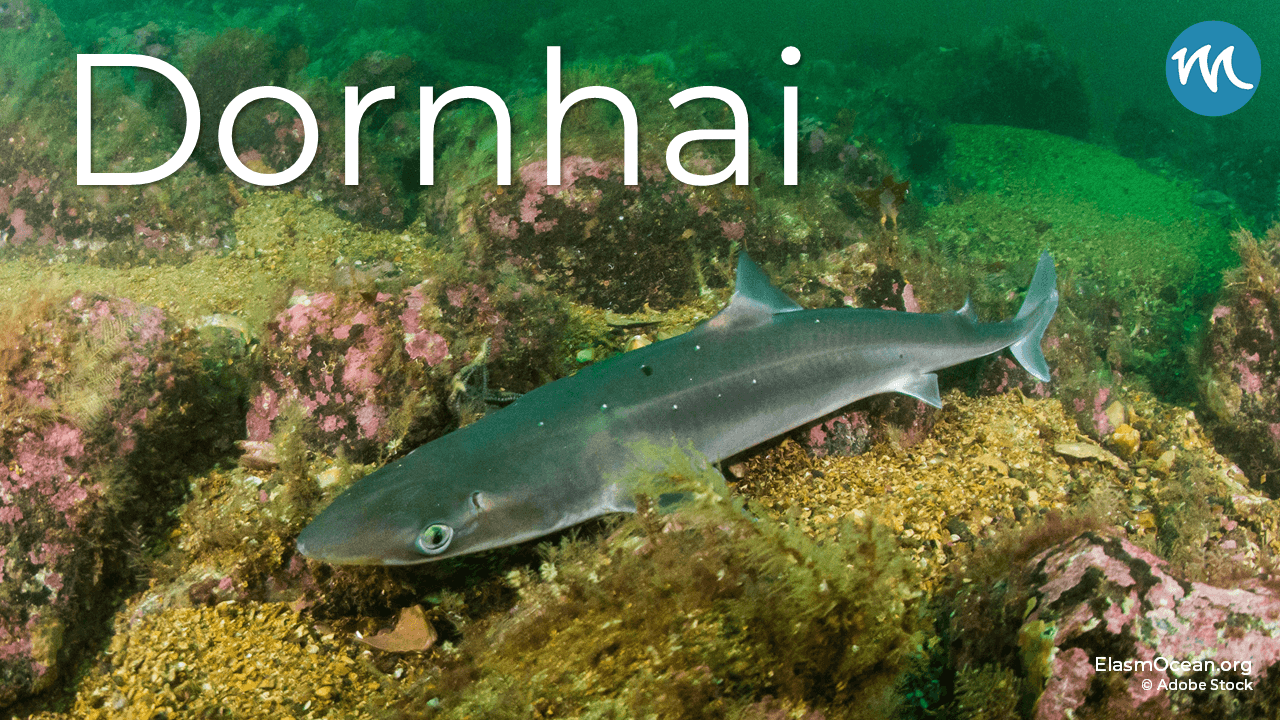
1. The Spiny Dogfish
The spiny dogfish (Squalus acanthias) grows up to 1.60 metres in length, and, depending on the marine region, females do not reach sexual maturity until about 23 years of age. Its distribution range extends across the Pacific and Atlantic Oceans into the North Sea and the Black Sea.
However, it is subject to fishing pressure almost everywhere in the world: the global population has shrunk to barely a third of its original size over the last five decades. In the Northeast Atlantic, the population even declined by 95 percent due to overfishing. The official fishing ban in all EU waters currently seems to be facilitating a slow recovery of the stocks.
Meanwhile, the belly flap of the spiny dogfish is even available on the German market under the name "Schillerlocke" with the MSC seal: it usually originates from the North American east coast, harvested in FAO area 21.
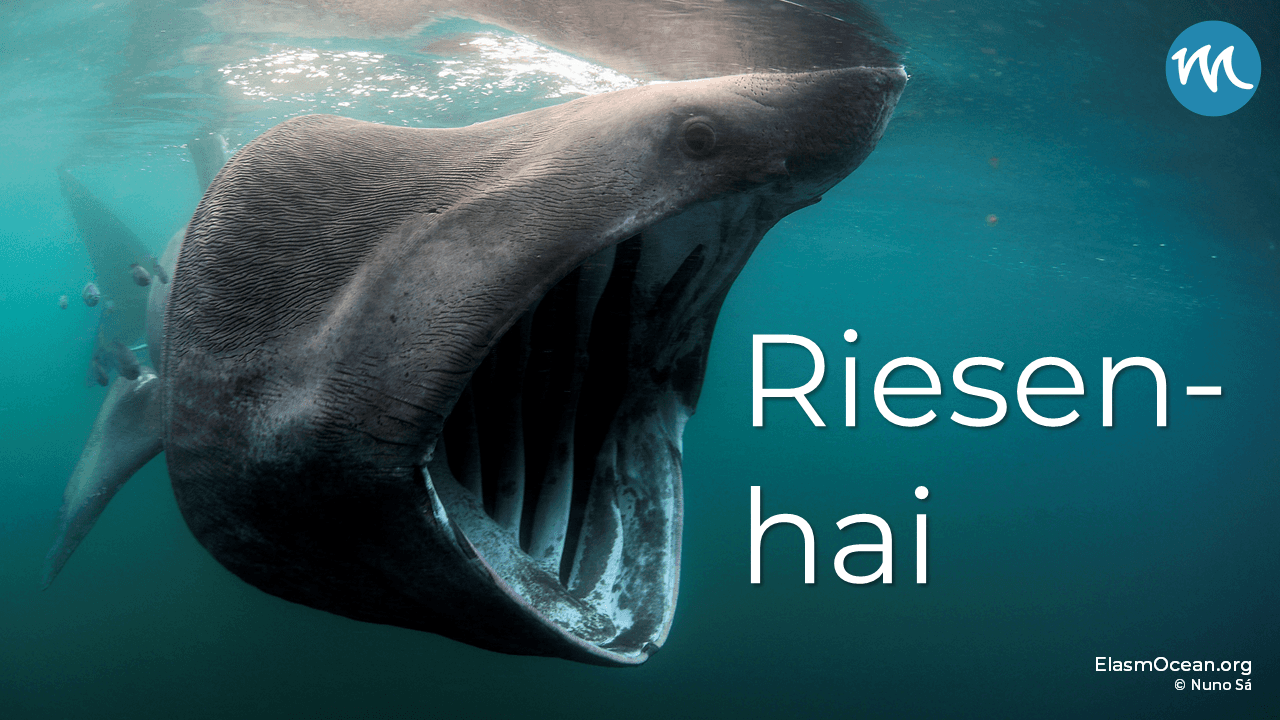
2. The Basking Shark
A large dark shadow occasionally glides through the cold waters of our latitudes: with its mouth wide open, the basking shark, which can reach up to 10 metres in size, moves through the typically turbid water. It is frequently encountered off the coast of Scotland, for example.
Despite its imposing size, Cetorhinus maximus is a harmless representative of its class, subsisting exclusively on zooplankton. This makes it the only shark in the order Lamniformes with this feeding habit, which appears highly unusual for sharks, filtering plankton from the water using gill rakers. It does not actively suck in water, but simply allows it to flow into its mouth. In this manner, an adult basking shark can filter between 1,800 and 2,000 tonnes of water per hour, which is essential given that it requires 500 kg of tiny zooplankton organisms per day.
With a weight of up to 4 tonnes, the basking shark is indeed surpassed by the whale shark, but remains the second-largest shark and the second-largest fish in the world.
Such a sighting offers a rewarding experience even for more cautious shark enthusiasts.
Source:
L.H. Matthews and H.W. Parker (1950): Notes on the anatomy and biology of the Basking Shark (Cetorhinus maximus). Proceedings of the Zoological Society of London. https://doi.org/10.1111/j.1096-3642.1950.tb00663.x
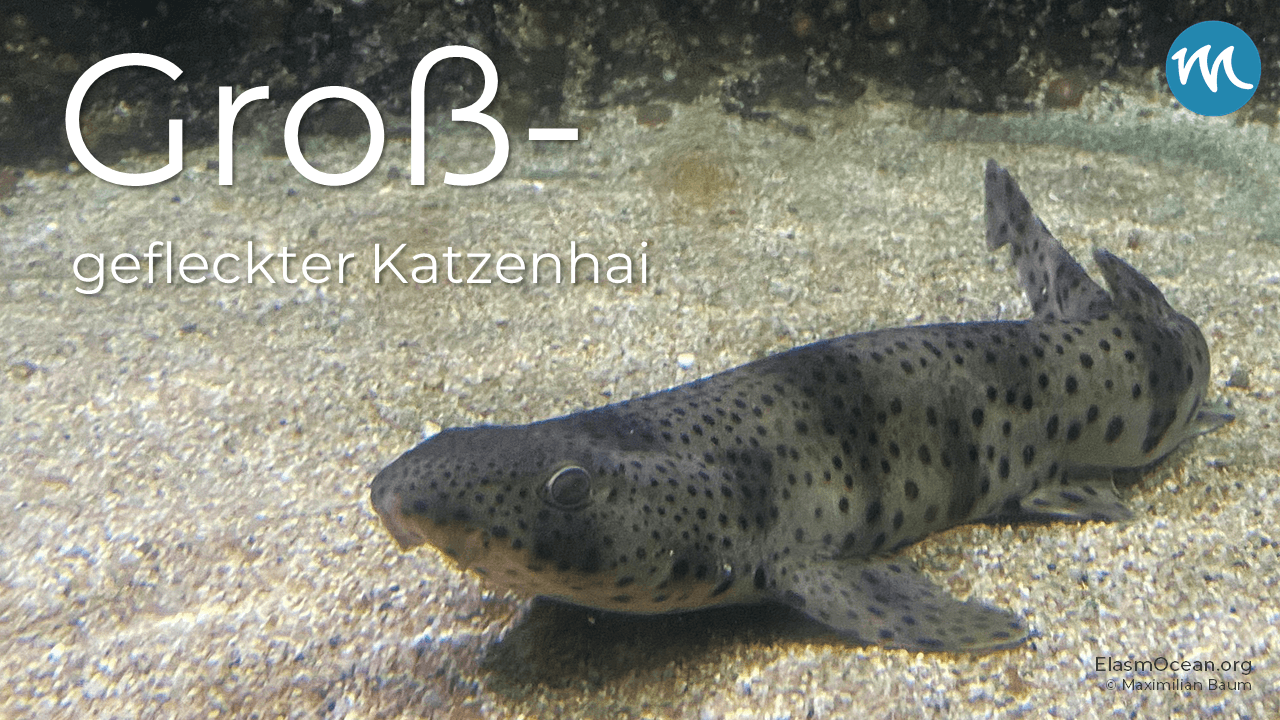
3. Greater Spotted Dogfish
Scyliorhinus stellaris is among the less-known inhabitants of our local seas, and consequently, little research is conducted on it. Its distribution range encompasses the Mediterranean, the North Sea and the Eastern Atlantic down to Senegal. Occasionally, its eggcases, referred to as "mermaid's purses", are found on our beaches, but this bottom-dwelling, mostly nocturnal shark is primarily impacted, unsurprisingly, by fisheries: France, Portugal and the United Kingdom are historically the primary fishing areas, where these animals, measuring approximately 1.3 m in length, are caught using bottom trawls and bottom set gillnets. The greater spotted dogfish also frequently ends up as bycatch in nets, though reliable data on this is lacking. Fisheries management is non-existent due to a lack of data, but the IUCN has classified the shark species as "Vulnerable".
Sources:
A. De Maddalena, H. Bänsch: Haie im Mittelmeer. Kosmos Naturführer, Franckh-Kosmos-Verlag, 2005. ISBN 978-3-440-10458-3
Marine Conservation Society: Good Fish Guide. https://www.mcsuk.org/goodfishg…/ratings/wild-capture/846/
Finucci, B., Derrick, D. & Pacoureau, N. 2021. Scyliorhinus stellaris. The IUCN Red List of Threatened Species 2021. https://dx.doi.org/…/IUCN.UK.2021-2.RLTS…
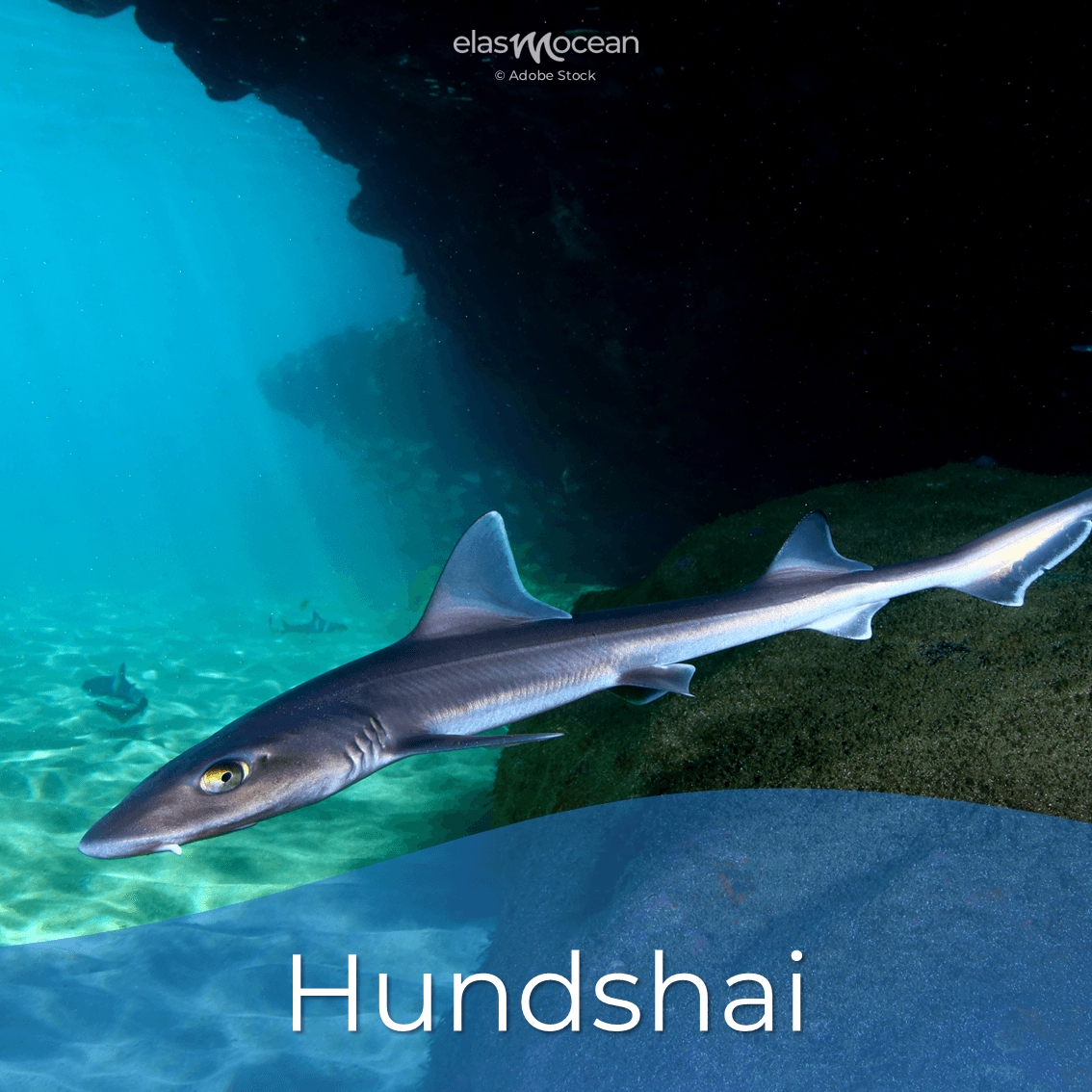
4. Tope
Schools of this slender, approximately 1.5-metre-long shark are increasingly rare in our local seas. The tope (Galeorhinus galeus) is classified by the IUCN as "Critically Endangered". The females, which grow slightly larger on average than males, give birth to between 10 and 50 live young approximately every three years – this slow reproduction cycle makes the species highly vulnerable to overfishing. Tope are targeted for their meat and fins, as well as for their liver, which is rich in oil and vitamin A.
The sharks often congregate in schools along coastal regions, but they are also frequently found caught on tuna longlines on the high seas. A study by the Scripps Institution of Oceanography in California demonstrated, at least for the Pacific population, that tope travel vast distances but return to their home region every three years to give birth. Such findings could assist in implementing targeted conservation measures within fisheries in the future to save our neighbors from extinction.
Sources:
Walker, T.I., Rigby, C.L., Pacoureau, N., Ellis, J., Kulka, D.W., Chiaramonte, G.E. & Herman, K: Galeorhinus galeus. The IUCN Red List of Threatened Species 2020. https://dx.doi.org/…/IUCN.UK.2020-2.RLTS.T39352A2907336.en
AP Nosal, DP Cartamil, AJ Ammann, et al.: Triennial migration and philopatry in the critically endangered soupfin shark Galeorhinus galeus. Journal of Applied Ecology, 2021. https://doi.org/10.1111/1365-2664.13848
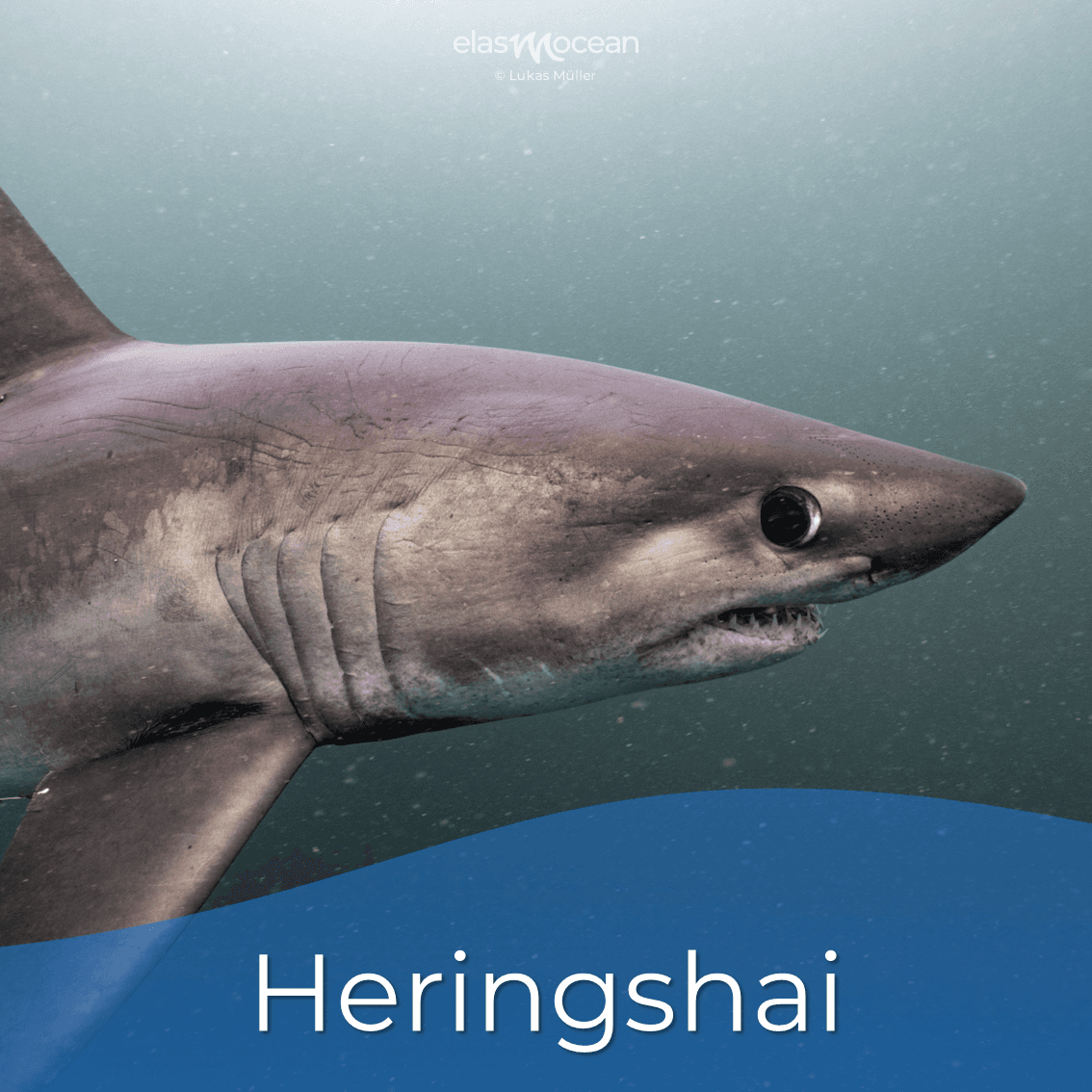
5. Porbeagle
While Great White Sharks only appear in the North Sea as occasional summer visitors, their relatives inhabit these waters permanently: the porbeagle (Lamna nasus) also belongs to the family Lamnidae. Due to severe overfishing in the mid-20th century, it remains classified as an endangered species on the IUCN Red List.
As a fast predator, it possesses a critical evolutionary advantage in the relatively cold waters of the northern latitudes: using a specialised circulatory system along its red muscle tissue, which is primarily located near its powerful tail fin, it can maintain its body temperature several degrees above that of the surrounding water. Great White Sharks and tuna also possess this physiological capability – in tuna, this likely evolved independently. This is considered a possible precursor to endothermy, or warm-bloodedness, which we possess as mammals. Reality bears little resemblance to the trope of cold-blooded, man-eating predators.
Source:
J.K. Carlson et al.: Metabolism, energetic demand, and endothermy. In: Carrier et al: Biology of Sharks and their Relatives. CRC Press, 2004, p. 203 ff. ISBN 0-8493-1514-X
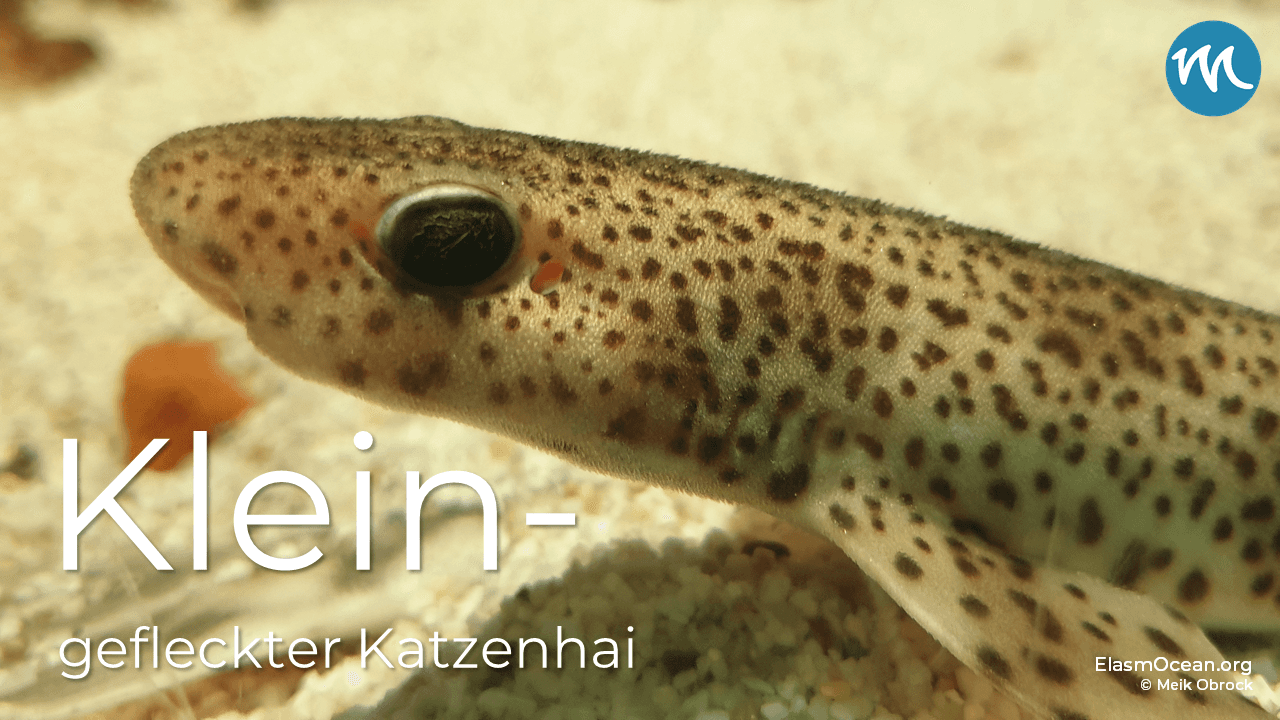
6. Small-Spotted Catshark
The small-spotted catshark (Scyliorhinus canicula) is arguably the most common shark in Europe. It is native from Norway to Senegal, as well as in the Mediterranean. These animals, measuring barely 1 metre in length, inhabit shallow areas of the seabed and consume almost any suitable prey they encounter.
Unusually for sharks, populations of this species are largely healthy – but this could change with climate change: catsharks lay semi-transparent eggs, known as mermaid's purses, in which the embryos develop. Once they are old enough, they begin to "swim" inside the eggcase to fan water for oxygenation. If a predator approaches, the young catsharks freeze this movement. In a recent study, scientists from Manchester demonstrated that this "freeze" is up to seven times shorter when the water temperature rises from 15 to 20°C. This is because the small embryos require significantly more oxygen at higher temperatures. Climate change could therefore shift the predator-avoidance dynamic to the disadvantage of the embryos.
Source:
DM Ripley, S De Giorgio, K Gaffney, L Thomas, HA Shiels: Ocean warming impairs the predator avoidance behaviour of elasmobranch embryos. Conservation Physiology, 2021. https://doi.org/10.1093/conphys/coab045
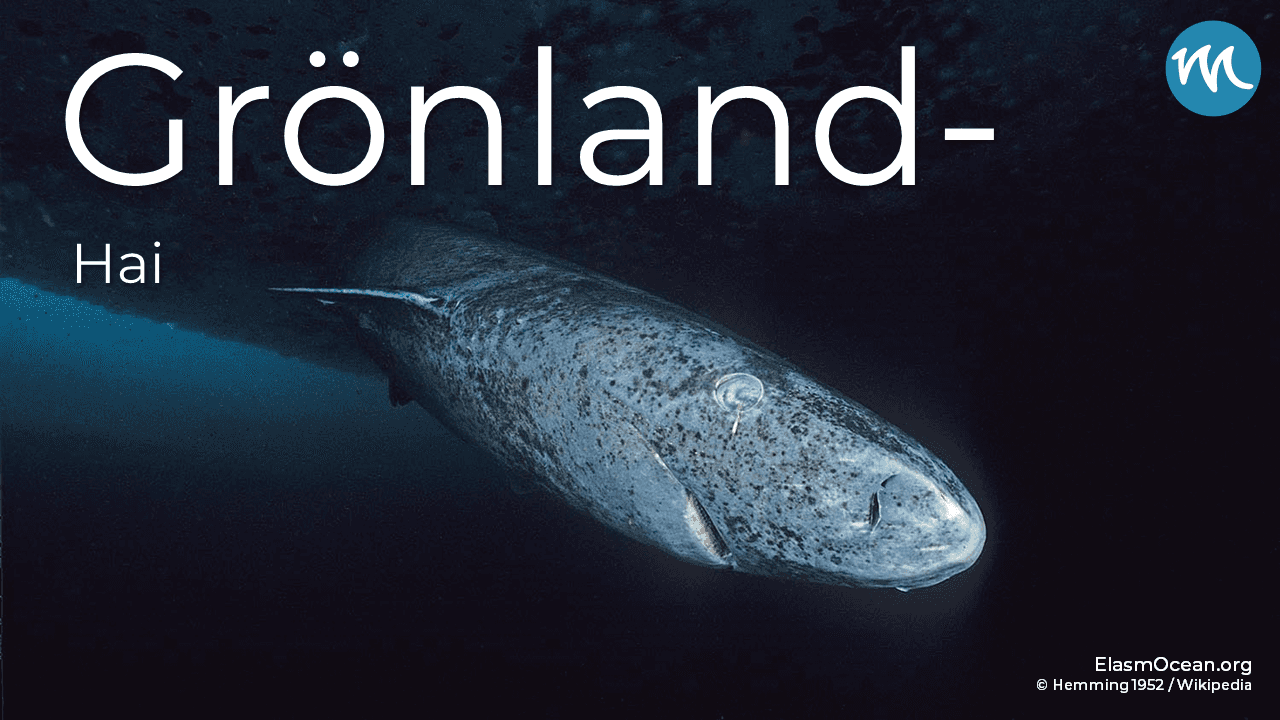
7. Greenland Shark
We introduce one of our most remarkable marine neighbours – the Greenland shark. It is the only shark that permanently inhabits the waters of the Arctic, yet it is also at home in the depths of the North Atlantic.
What makes Somniosus microcephalus so exceptional? It is the longest-lived vertebrate on our planet. While Jonathan, the Seychelles giant tortoise, is approximately 190 years old, radiocarbon studies of Greenland sharks indicate a lifespan of at least 392 years – plus or minus 120 years.
It is scientifically established that these animals grow slowly and do not reach sexual maturity until about 150 years of age. In the freezing cold of the Arctic, they thus endure through time – Greenland sharks living today may have already been alive during Shakespeare's era.
Primarily due to shark harvesting for lamp oil up into the 1960s, the Greenland shark is currently library-listed by the IUCN as "Vulnerable". Given their lifespan, populations recover extremely slowly from fishing pressure. It is therefore vital to integrate these mysterious creatures into marine conservation strategies.
Sources:
J. Nielsen et al.: Eye lens radiocarbon reveals centuries of longevity in the Greenland shark (Somniosus microcephalus). Science, 2016. http://doi.org/10.1126/science.aaf1703
P.M. Kyne et al.: Somniosus microcephalus. The IUCN Red List of Threatened Species 2006. https://dx.doi.org/10.2305/IUCN.UK.2006.RLTS.T60213A12321694.en
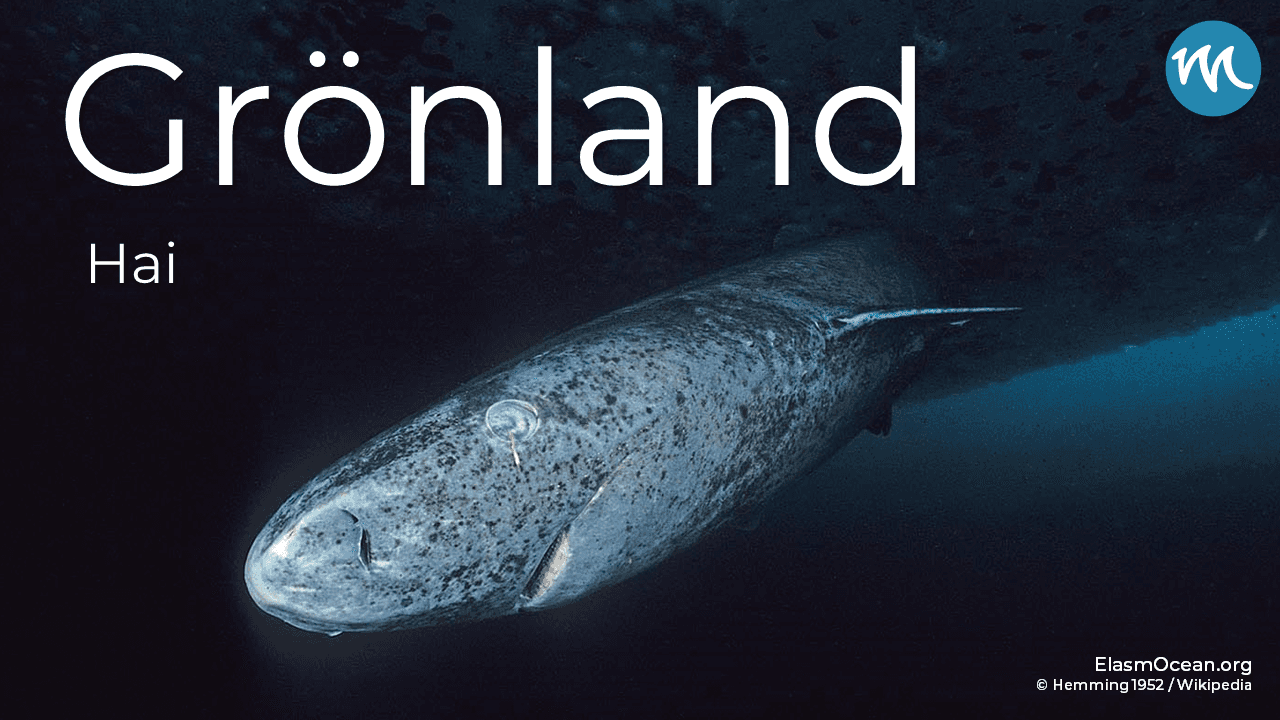
7a. Greenland Shark II
In the last instalment, we introduced one of our most remarkable neighbours, Somniosus microcephalus, the Greenland shark. It can reach an age of around 400 years, and because such a long life has much more to tell, today we present the second part on our ancient neighbour:
For a long time, it was assumed that the sluggish Greenland shark moved through the Arctic primarily as a scavenger. However, an increasing number of studies suggest that these animals also actively hunt. In Svalbard, for example, a harbor seal population has a relatively short lifespan despite a hunting ban and a lack of other natural predators. It is hypothesized that the Greenland sharks of Svalbard are the primary predators of these seals.
In another study analysing the stomach contents of Greenland sharks around Greenland, similar indications were found: alongside some anthropogenic waste like a Pepsi can and fishing nets – since no place on Earth is safe from our waste – there were fish, molluscs, crabs, jellyfish and numerous seals. One of the sharks had even consumed a polar bear.
Direct video evidence of the hunting strategies of the Greenland shark, however, remains outstanding.
Sources:
L-M. E. Leclerc et al.: A missing piece in the Arctic food web puzzle? Stomach contents of Greenland sharks sampled in Svalbard, Norway. Polar Biology, 2012. http://doi.org/10.1007/s00300-012-1166-7
J. Nielsen et al.: Distribution and feeding ecology of the Greenland shark (Somniosus microcephalus) in Greenland waters. Polar Biology, 2013 http://doi.org/10.1007/s00300-013-1408-3
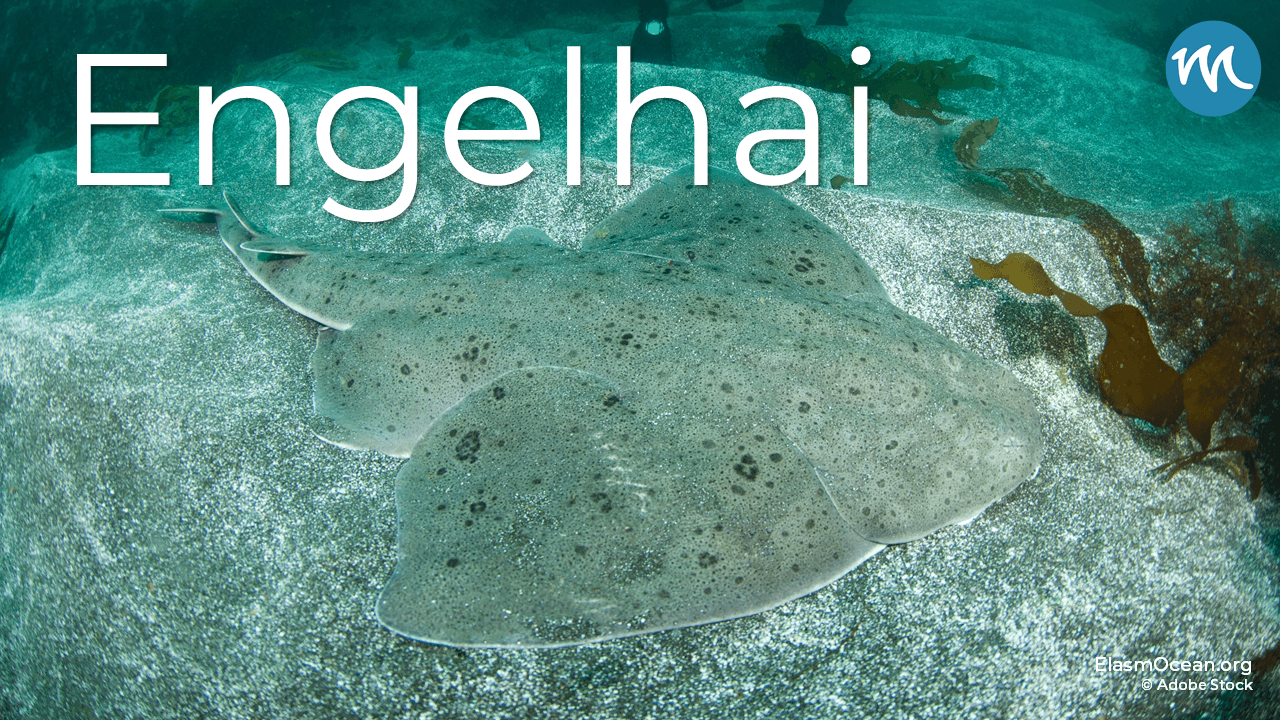
8. Angelshark
Concealed on the sandy seabeds of the shallow continental shelves lives the angelshark (Squatina squatina). Due to its flat, rounded form, it can easily be mistaken for a ray. Its native habitat historically encompassed waters from Norway to North Africa, the Mediterranean and the Black Sea.
Targeted as a food fish for millennia, the species is now critically endangered. In the Adriatic Sea alone, approximately 60 tonnes of angelshark were caught per year between 1919 and 1924, prior to the collapse of the stocks. Historical fisheries data and interviews with fishers indicate that the Adriatic once teemed with this species, which is now exceedingly rare. This "shifting baseline", which distorts our perception of ecological normalcy, is a primary challenge in conservation biology.
We hope that angelsharks receive the conservation attention these mysterious animals deserve.
Source:
T. Fortibuoni et al.: Common, rare or extirpated? Shifting baselines for common angelshark, Squatina squatina (Elasmobranchii: Squatinidae), in the Northern Adriatic Sea (Mediterranean Sea). Hydrobiologia, 2016. http://doi.org/10.1007/s10750-016-2671-4
This series ran from 09/02 to 27/04/2022


