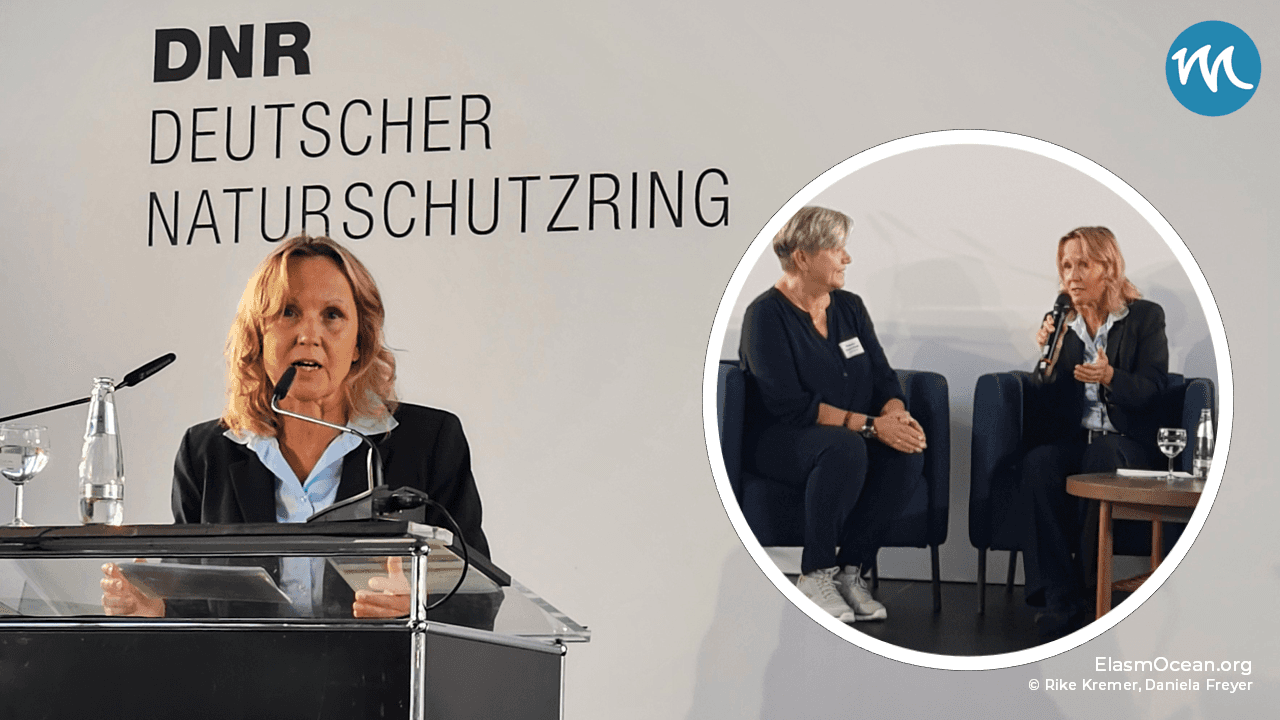
Hardly had she returned from New York and the UN General Assembly in mid-September than the German Environment Minister Steffi Lemke was available to the Deutscher Naturschutzring (DNR) at its annual general meeting for a welcoming address followed by a discussion. And she had good news in her luggage: The immensely important international marine protection treaty has been signed, which is intended to better protect two-thirds of the oceans in future, namely the high seas outside the Exclusive Economic Zones (EEZ). This treaty under international law creates the basis for designating large protected areas on the high seas, in line with the 30/30 target.
What it means to implement this in practice became clear in the subsequent panel discussion. The 30% marine protected areas, as is already known, will be divided into one third (10% in total) of so-called "no-take" zones: marine areas in which no human use of any kind is permitted. Here, nature is left to its own devices and allowed to recover. Currently, this applies to only 2.6% of the oceans worldwide, so it will quadruple. The "other 20%" of the marine protected areas will be used "sustainably", whatever that may look like in practice.
In response to a question from Friederike Kremer-Obrock, who represented ElasmOcean at the general meeting, the minister stated that this would also apply to the North and Baltic Seas: 10% of German marine areas and the international areas of the North and Baltic Seas will (sooner or later) be declared "no-take" zones.
However: it is a long road. Steffi Lemke explained somewhat soberingly that she would be pleased to be able to establish 5% properly. "That is a real challenge!" said the Environment Minister, who answered patiently and in detail despite severe jet lag.
And another prospect: an EU-wide ban on dolly ropes for demersal otter trawling is currently being drafted in Brussels, according to the minister. That is instantly encouraging!
Our conclusion: The mills of (environmental) politics grind slowly, but steadily. And we had the positive impression that there was a minister who takes her "craft" seriously, is passionate about the oceans, and leads her ministry with great dedication. We are keen to see what can be politically achieved - and will help where we can.